
Cream Kettles
A cream kettle softens a worktop without going beige-bland, working as easily in a Shaker kitchen as it does next to gloss handleless units. The choice runs from tiny 0.8 litre Smeg icons to family-sized 1.7 litre jugs, with retro domes and quiet-boil designs in between.
- Relevance
- Price: Low - High
- Price: High - Low
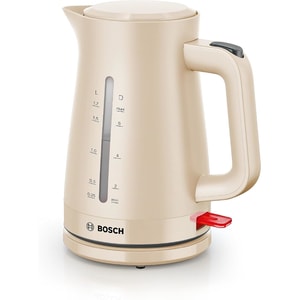
Type: Cordless jug kettle • Capacity: 1.7 L • Power: 3000 W
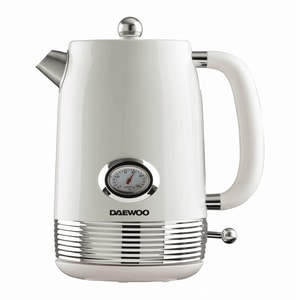
Type: Cordless jug kettle • Capacity: 1.5 L • Power: 3000 W
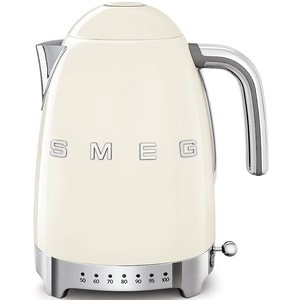
Type: Cordless jug kettle • Capacity: 1.7 L • Power: 3000 W
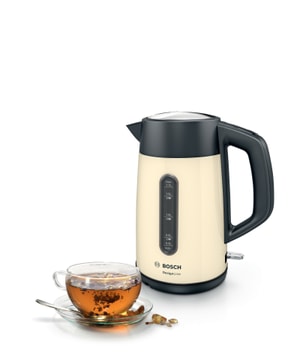
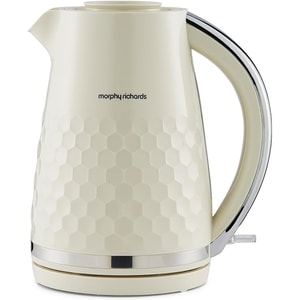
Cordless Jug Kettle • Capacity: 1.5 L • 3000 W
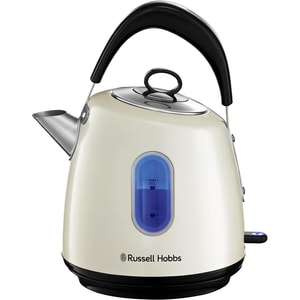
Cordless Traditional Kettle • Capacity: 1.5 L • 3000 W
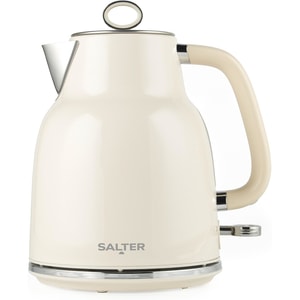
Cordless Jug Kettle • Capacity: 1.7 L • 3000 W
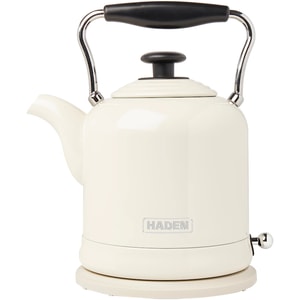
Cordless Jug Kettle • Capacity: 1.5 L • 3000 W
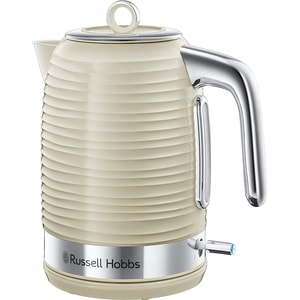
Cordless Jug Kettle • Capacity: 1.7 L • 3000 W
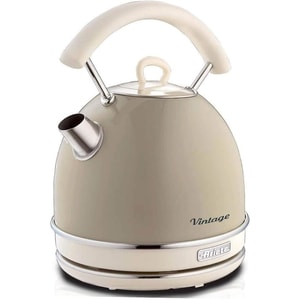
Cordless Jug Kettle • Capacity: 1.7 L • 2000 W
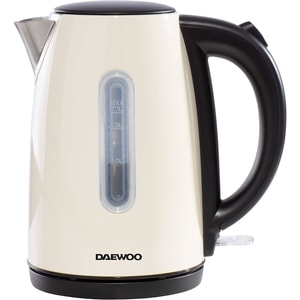
Cordless Jug Kettle • Capacity: 1.7 L • 3000 W
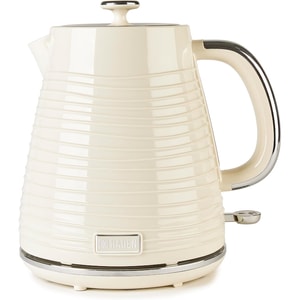
Cordless Jug Kettle • Capacity: 1.7 L • 3000 W
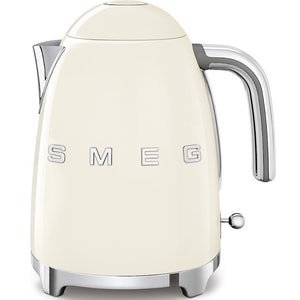
Type: Cordless Jug Kettle • Capacity: 1.7 L • Power: 3000 W
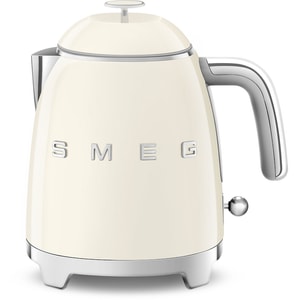
Cordless Jug Kettle • Capacity: 0.8 L • 1400 W
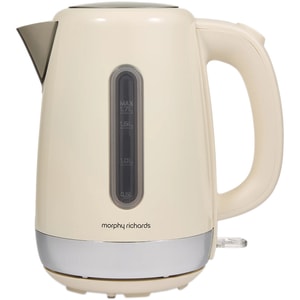
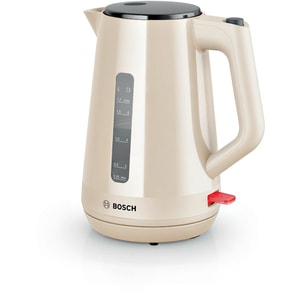
Will cream actually suit your kitchen?
Cream is the most forgiving warm neutral on the worktop, but the undertone matters more than the label. A warm cream with yellow in it sits beautifully against oak, walnut and Shaker doors, and reads as cottage-classic. A cooler cream with a hint of grey works harder against gloss white units and handleless cabinetry, where a true cream can suddenly look dated. Hold a sample of the kettle's product photo against the cabinet door at the same time of day you brew most often. Warm LED bulbs push cream further yellow, cool daylight bulbs flatten it toward off-white, and that one check saves a lot of returns. Read More...
Cream, beige, ivory or off-white?
Treat them as a spectrum. Cream carries warmth, beige tilts browner, ivory has a pale yellow softness and off-white is essentially cool chalk. Most jug kettles described as cream or beige will read close enough on the worktop, but pattern-led pieces and enamel finishes hold their tone more accurately than painted plastics.
How much do you actually need to spend?
The honest answer is somewhere between £30 and £60 for the vast majority of households. That bracket buys a cordless 1.7 litre jug from Russell Hobbs, Bosch, Morphy Richards or Haden with a 3 kW element, removable limescale filter and a finish that will hold its colour for years. Below £30, the build feels lighter and the warranty thinner. Above £100 is design territory rather than performance, and that is where Smeg's 50's Style sits, paying for enamel, silhouette and the badge.
Is the upgrade to a quiet boil worth it?
In an open-plan kitchen, almost always. Russell Hobbs has the deepest cream lineup of quiet boil models and the noise drop is genuinely noticeable, not marketing. Quiet tech doesn't slow the boil, it just stops the kettle dominating a room when someone is on a call or asleep upstairs.
Which size and shape fits the way you brew?
Capacity sets daily energy use more than wattage does. A 1.7 litre body is the UK default and pours seven mugs in one go, which suits a family or a houseful. A 1.5 litre kettle trims weight and footprint without losing the round-of-tea capacity. The 0.8 litre Smeg KLF05 is built for one or two cups in a small kitchen, where the kettle has to look as good as it fits.
Modern jug or retro dome?
Modern jugs like the Bosch Styline and Russell Hobbs Inspire suit minimalist schemes and pour precisely from a tapered spout. Retro dome shapes, including the Salter Retro, Haden Highclere, Ariete Vintage Dome and the Smeg 50's icons, sit better with Shaker units, butler sinks and warm timber. Pattern-led options such as the VQ Cath Kidston add a soft floral note for cottage and country kitchens.
Which features earn their keep daily?
Variable temperature is the biggest brewing upgrade, particularly for green tea, white tea and pour-over coffee, all of which are ruined by a full boil. A keep warm function is the next tier up, holding the set temperature for around half an hour, which suits cafetiere and French press routines. Beyond those two, look for a wide-opening lid for easier descaling, a clear cup-marked window so you only boil what you need, and a removable limescale filter, which is the single biggest taste upgrade in hard water postcodes across the South East, Midlands and East Anglia.
Can you match a cream kettle to a toaster and microwave?
This is the question most cream kettle buyers ask about ten minutes after the kettle arrives, and it's worth thinking about before you commit. The strongest matched ranges come from Smeg, where the 50's Style kettle, two-slice and four-slice toasters and microwave share the same enamel and silhouette in identical cream tones. Russell Hobbs runs co-ordinated cream lines across kettles and toasters under the Inspire and Stylevia names, and Morphy Richards and Haden both offer paired kettle-and-toaster sets in matching cream finishes.
Sometimes, the trap is in mixing brands. A "cream" Russell Hobbs and a "cream" Bosch can read as noticeably different shades side by side under the same kitchen lighting, with one warmer and one cooler. If a perfectly matched set matters, stay within a single brand and ideally a single product range. If you're happy with a tonal mix rather than an exact match, pair stainless-trimmed kettles with stainless-trimmed toasters so the metal accents tie the look together even when the creams aren't identical.
Frequently Asked Questions
Most retailers use the terms interchangeably, but cream tends to carry a slight yellow warmth while beige leans browner and a touch greyer. On the worktop, the difference is subtle and is mostly visible against bright white cabinetry. Check the product photo against your own kitchen lighting before deciding, because warm bulbs exaggerate cream and cool bulbs flatten it.
Smeg leads on design with the 50's Style icons. Russell Hobbs and Bosch cover the mid-market with reliable jug models and good warranties. Morphy Richards, Haden and Salter offer strong value, with Haden and Salter leaning retro. Ariete and VQ are the choices when you want something more characterful, with Ariete's vintage dome shape and VQ's Cath Kidston floral being the standout examples
For shoppers buying as much for the look as the brew, yes. The enamel finish ages well, the silhouette has held its value across more than a decade of resale, and the build feels noticeably more solid than mid-range alternatives. For pure boiling performance, a £40 jug kettle does the same job in less time.
Quality enamel and powder-coat finishes hold their colour for years. Yellowing usually traces back to UV exposure from a sunny windowsill or steam build-up from a kettle parked under a wall cabinet. Wipe down after each boil and keep the kettle out of direct sunlight, and the finish stays close to new.
A 1.7 litre capacity covers seven mugs in a single boil, which suits a family round of tea or coffee. Couples and one-person households often prefer 1.5 litres for a smaller footprint, while a 0.8 litre kettle works for compact kitchens, holiday lets and offices where one or two cups at a time is the norm.
Yes. Russell Hobbs has a strong line in quiet-boil cream kettles, and several Bosch and Haden models also damp the bubbling sound during heat-up. Quieter boil tech doesn't slow the kettle, it just changes the sound profile, which makes a real difference in open-plan kitchens and early-morning routines.
Roughly, yes. A dome kettle has a rounded curved top, often with a whistling-style spout, and reads as 1950s diner. A pyramid kettle has straighter sloping sides into a narrower top, leaning more 1930s art deco. In cream finishes, dome shapes are the more common option, with the Ariete Vintage Dome and Smeg 50's Style being the clearest examples.
Wipe the exterior with a soft damp cloth, no abrasives, because scouring pads dull cream finishes faster than steam ever does. For the interior, run a citric acid descaler or a 50/50 white vinegar and water mix every four to six weeks in hard water areas, then boil and discard one full kettle of fresh water before brewing again.