
AEG Dishwashers

AEG dishwashers cover most kitchen layouts, from full-size freestanding units to fully integrated, semi-integrated and slimline builds. The line-up runs across AEG's 3000, 5000, 6000 and 7000 series, with quiet running, useful place-setting capacities and a quick wash cycle on every model.
- Relevance
- Price: Low - High
- Price: High - Low
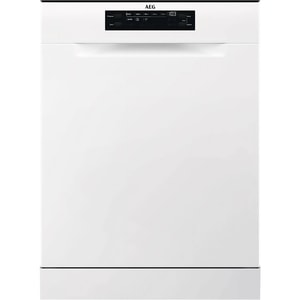
Full-size freestanding • Place Settings: 13 • Energy rating: C
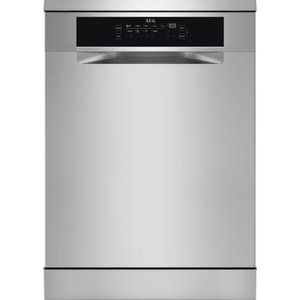
Installation: Freestanding • Place Settings: 14 • Energy Efficiency Class: D
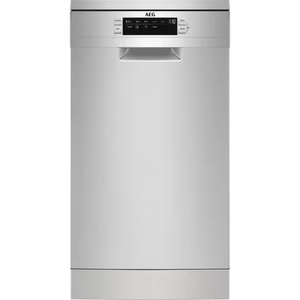
Installation: Freestanding • Place Settings: 10 • Energy Efficiency Class: D
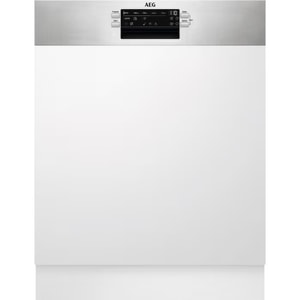
Installation: Semi-integrated • Place Settings: 14 • Energy Efficiency Class: C
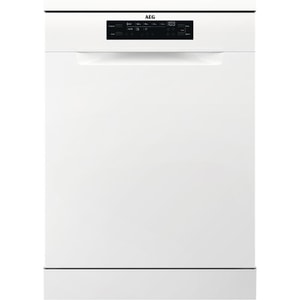
Full-size freestanding • Place Settings: 13 • Energy rating: E
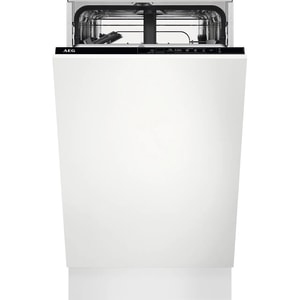
Installation: Fully integrated • Place Settings: 9 • Energy Efficiency Class: F
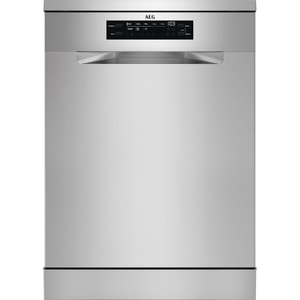
Full-size freestanding • Place Settings: 13 • Energy rating: C
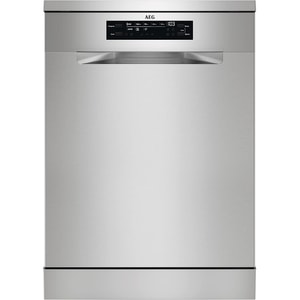
Full-size freestanding • Place Settings: 14 • Energy rating: D
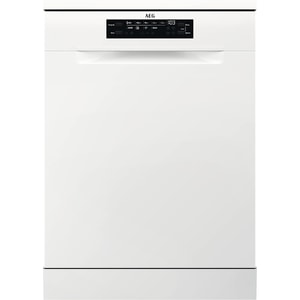
Installation: Freestanding • Place Settings: 15 • Energy Efficiency Class: D
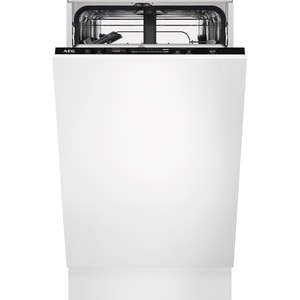
Installation: Fully integrated • Place Settings: 9 • Energy Efficiency Class: E
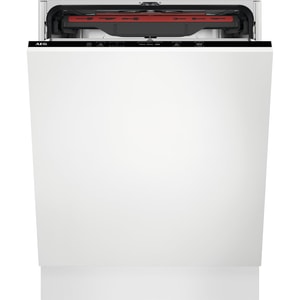
Installation: Fully integrated • Place Settings: 14 • Energy Efficiency Class: E
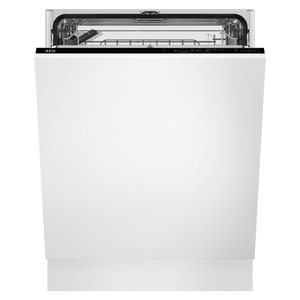
Installation: Fully integrated • Place Settings: 13 • Energy Efficiency Class: E
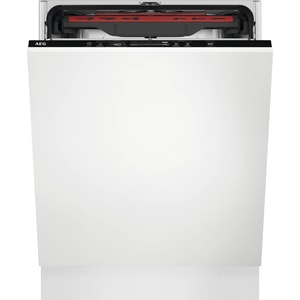
Installation: Fully integrated • Place Settings: 14 • Energy Efficiency Class: C
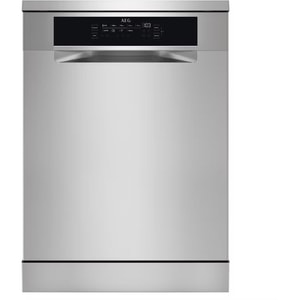
Installation: Freestanding • Place Settings: 14 • Energy Efficiency Class: C
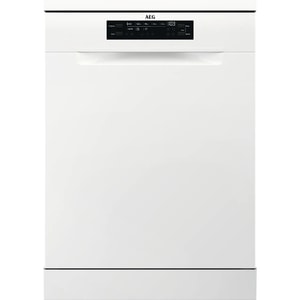
Installation: Freestanding • Place Settings: 13 • Energy Efficiency Class: E
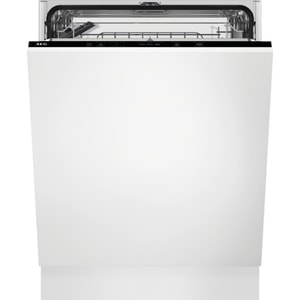
Installation: Fully integrated • Place Settings: 13 • Energy Efficiency Class: E
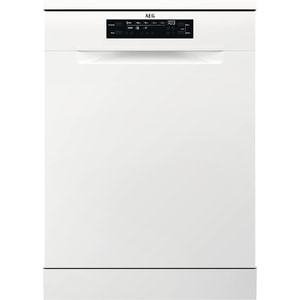
Installation: Freestanding • Place Settings: 13 • Energy Efficiency Class: D
Which AEG dishwasher type fits your kitchen?
AEG splits cleanly into four installation types, and getting this right matters more than any other choice. A freestanding model sits between cupboards with a finished side panel and a visible AEG door, easy to take with you if you move. A fully integrated model hides behind a cupboard door panel you supply, with controls on the top edge so the kitchen reads as one continuous run. A semi-integrated keeps the controls visible on a slim front strip, which is handy if you like seeing time remaining without opening the door. Read More...
Slimline matters if your run is tight. A standard AEG dishwasher needs roughly 60cm of width, a slimline needs around 45cm. You lose a few place settings, but you gain a working cupboard somewhere else.
How many place settings do you actually need?
Place settings sound abstract until you load a real dinner. As a rough guide, a couple manages on 9 to 10, a family of four is comfortable at 13, and 14 to 15 makes sense if you batch-cook, host often or want to run the machine less frequently. AEG's full-size models cluster around 13 and 14 settings, with one 15-setting model for bigger households. The slimline range sits at 9 to 10 settings, which is fine for two adults and the odd guest, less fine for a Sunday roast for six.
Worth paying more for a higher AEG series?
AEG numbers its ranges 3000, 5000, 6000 and 7000, and the jump up the ladder usually buys quieter running, better drying (AirDry door pop), more flexible racking (MaxiFlex cutlery tray, adjustable middle basket), more wash programmes and tighter water and energy use. If your kitchen is open-plan and the dishwasher runs while you watch TV, paying up for a 44 dB(A) or 42 dB(A) model is the single upgrade you'll notice every day. If it lives behind a closed utility-room door, a 46 to 49 dB(A) machine from a lower series saves money you won't miss.
What energy rating should you accept?
Under the current EU label, AEG dishwashers in the UK typically sit between C and F. C is the realistic ceiling across this brand right now, and the gap between C and E over a ten-year life is real but not dramatic, perhaps £15 to £30 a year depending on cycles and tariff. Pay attention if you run the machine daily; relax about it if you run it three times a week.
Connections, fit and the install nobody mentions
AEG dishwashers use a standard 13A plug and standard 3/4 inch hot or cold fill hose, so swapping like-for-like is rarely an issue. Three things catch people out. Door panel weight on integrated models has a maximum the hinges are sprung for, check this before ordering a thick oak panel. Aperture height is fixed; if your existing cabinetry was cut for an older 82cm machine and the new one is 85cm, the worktop has to lift. And the waste hose has a maximum rise, usually 1m, which becomes a problem when the machine sits below a hob with a deep pan drawer above the trap.
Frequently Asked Questions
AirDry pops the door open a few centimetres at the end of the cycle so steam escapes and dishes finish drying naturally. It improves drying on plastic items noticeably and uses no extra energy. The trade-off is a small puff of steam into the kitchen, which matters if the machine sits directly under a delicate worktop edge or beside a cabinet you'd rather not steam-condition daily.
End-of-cycle beeping is a normal feature on most AEG models and can usually be muted in the settings menu, often by holding the programme button while powering on. Persistent beeping with a flashing light during a cycle usually points to a fault code: low water (check the inlet tap is fully open), blocked filter (rinse the mesh at the base), or a drain issue (clear the waste hose loop). The user manual lists the exact code-to-cause map for each model.
Fully integrated hides behind a custom door panel with controls on the top edge, so the kitchen looks unbroken. Semi-integrated also takes a panel but leaves a control strip visible at the top of the door, useful if you want to read cycle time without opening it. Freestanding has a finished AEG facia, no panel needed, easiest to swap out later. Cost-wise they sit close, the bigger spend is the cabinet door for integrated models.
A slimline AEG holds 9 or 10 place settings against 13 to 15 for a full-size. For two adults plus a child, run daily, that works. For four people who cook from scratch, you'll either run it twice a day or constantly hand-wash the overflow. If your run is genuinely 45cm, slimline is the answer. If you can find 60cm, take it.
Integrated AEG models accept a standard kitchen cabinet door cut to the unit's panel dimensions, with weight limits the hinges are tuned to (typically around 9 to 11kg depending on the series). Your kitchen supplier will cut and drill the panel to AEG's template. The hinge spring tension is adjustable on most models so a heavier solid-wood door doesn't slam.
Anything at 44 dB(A) or below is quiet enough to hold a conversation next to. 46 to 47 dB(A) is noticeable but not intrusive. 49 dB(A) is fine in a closed utility but you'll hear the rinse cycle from a sofa. Open-plan layouts are where AEG's quieter models genuinely earn their premium.
AEG sits in the upper-mid bracket for dishwasher reliability in UK consumer surveys, with a typical service life of around 10 years if you clean the filter monthly, run a maintenance wash with dishwasher cleaner every couple of months and use rinse aid. The most common failure points are the drain pump (usually a debris jam, often fixable) and the door hinges on heavy integrated panels.
Most current AEG dishwashers in the UK accept a cold or hot fill up to around 60°C. Connecting to hot fill can reduce cycle time and electricity used to heat water, but only saves money if your hot water is gas-fired and the run from the cylinder to the machine is short. With a long pipe run, the dishwasher draws in cooled standing water and reheats it anyway, wiping out the gain.