
Stainless Steel Kettles
Stainless steel kettles look smart, hold up to daily knocks and won't taint your brew the way some plastics can. The choice mostly comes down to finish, capacity, wattage and whether you want variable temperature for tea and pour-over coffee. Here's what to weigh up before you buy.
- Relevance
- Price: Low - High
- Price: High - Low
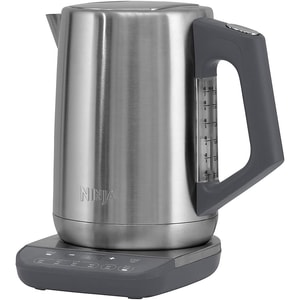
Cordless Jug Kettle • Capacity: 1.7 L • 3000 W
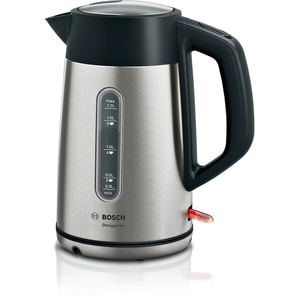
Cordless Jug Kettle • Capacity: 1.7 L • 3000 W
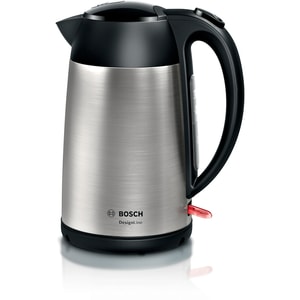
Cordless Jug Kettle • Capacity: 1.7 L • 3000 W
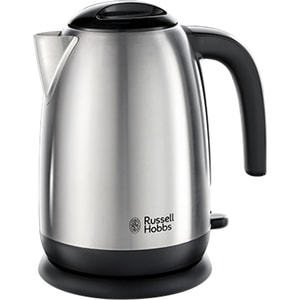
Type: Cordless jug kettle • Capacity: 1.7 L • Power: 3000 W
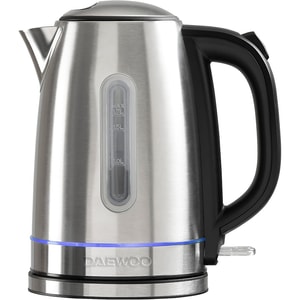
Type: Cordless Jug Kettle • Capacity: 1.7 L • Power: 3000 W
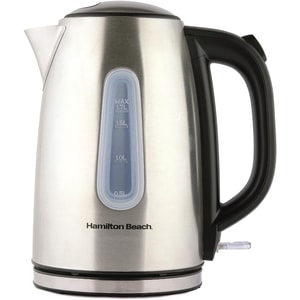
Type: Cordless Jug Kettle • Capacity: 1.7 L • Power: 3000 W
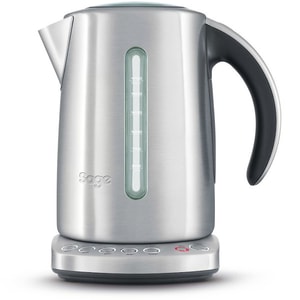
Type: Cordless jug kettle • Capacity: 1.7 L • Power: 2400 W
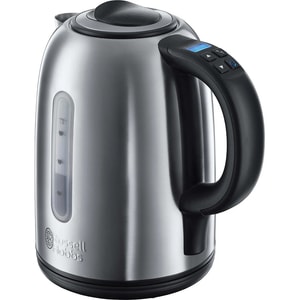
Type: Cordless Jug Kettle • Capacity: 1.7 L • Power: 3000 W
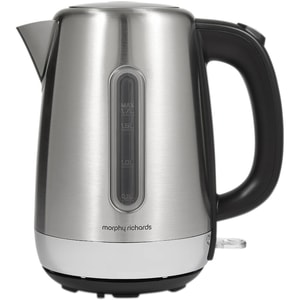
Why pick stainless over plastic or glass?
Steel bodies stay solid. They take the daily clatter of a busy kitchen, don't yellow with age, and won't carry yesterday's flavours into today's tea. If you've ever opened a plastic kettle and caught that faint warm-plastic smell, that's the bit you're escaping. Steel rinses out clean, descales easily and tends to last longer on the worktop, which matters when a kettle gets used five or ten times a day. Read More...
Is "no plastic" really no plastic?
Mostly the body, lid and spout are steel; the handle, water window and base electronics often still use plastic. Genuinely plastic-free contact with hot water is rare in electric models. If you want zero plastic on the boil path, you're usually looking at a stovetop kettle, which is a separate category.
How big should it be?
For most UK households a 1.7 litre body is the sweet spot: enough for a full pot of tea or four mugs in one go, without taking forever for a single cup. Smaller capacities (around a litre) are kinder if you live alone, save energy and fit better under low cabinets. Bigger than 1.7 litres and you start paying in weight and worktop footprint.
Does wattage actually matter?
Yes, but within reason. A 3 kW element will boil a mug's worth in under a minute; a 2.4 kW unit is noticeably slower but often quieter. If speed is the priority, go 3000 W. If you want a calmer morning, the trade-off is fair.
When is variable temperature worth paying for?
If you only ever brew builder's tea, skip it. If you drink green tea, white tea, oolong, matcha, or you make pour-over or French press coffee, variable temperature changes the cup. Boiling water scorches delicate leaves and over-extracts coffee; presets in the 70 to 90 °C range protect flavour. Keep warm functions are useful if you brew in rounds rather than one-shot.
Brushed or polished steel?
Brushed stainless steel hides fingerprints and softens the look. It pairs well with stainless ovens, hobs and extractor hoods, which is most modern UK kitchens. Polished steel is brighter and shows every print and water spot; lovely if you'll wipe it down daily, less forgiving if you won't. Either way, look for a removable limescale filter in the spout, an auto shut-off, and a wide enough lid that you can actually get a sponge inside.
What's a fair price?
Entry-level stainless kettles start in the low twenties and do the job well. The fifty to a hundred pound bracket buys you tidier build, sturdier hinges, often a quieter boil. Above that, you're paying for design heritage, multi-temperature electronics or both. Black Friday, Boxing Day and the January sales are the strongest moments to pick up a premium model at a mid-range price.
Frequently Asked Questions
Usually, yes. Steel doesn't absorb taste or smell, copes better with knocks and tends to outlast plastic on heavy use. The water touches less plastic on the way to your mug, which is the main reason a lot of shoppers switch. The trade-offs are weight, a hotter outer surface unless the kettle is double-walled, and a slightly higher entry price.
Good-quality stainless resists rust because chromium in the alloy forms a thin protective layer. You can occasionally see tiny brown spots if minerals from very hard water sit in the base, but they wipe off. Empty out unused water, leave the lid ajar to dry, and descale every few weeks if you're in a hard-water area.
Not automatically. Boiling noise comes mainly from the water and the element. Double-walled or insulated steel bodies can dampen the sound noticeably, and lower-wattage models tend to be calmer because the boil is gentler. If quiet is the priority, look for a model that explicitly markets a quiet boil.
If you drink tea beyond standard black tea, or you make pour-over or French press coffee at home, yes. Green and white teas taste cleaner brewed below boiling, and coffee extracts more evenly around 90 to 96 °C. If your routine is teabag, milk, done, the upgrade is hard to justify.
Only stovetop stainless kettles with a magnetic base. Electric jug kettles sit on their own powered base and don't interact with the hob, so the hob type doesn't matter. If you specifically want a stovetop kettle for an induction hob, check for an induction-compatible mark on the base.
Wipe the outside with a soft cloth and a drop of washing-up liquid; avoid wire wool or harsh abrasives because they leave fine scratches that catch grease. Inside, descale with a citric acid or white vinegar solution every few weeks in hard-water areas. A removable limescale filter in the spout is worth checking and rinsing weekly.
If worktop space is tight, a 1 to 1.2 litre kettle takes up less room and weighs less when full. For a family of four or anyone who hosts often, 1.7 litres is the comfortable working capacity and the most widely available size in stainless steel.
Brands you'll typically see include Russell Hobbs and Morphy Richards at the value end, Bosch and Kenwood through the mid-range, Sage and Dualit at the premium end, with Ninja and Daewoo offering specific feature-led models. Each has a different flavour, from heritage British design to precision-temperature electronics, so it's worth matching the brand to how you actually drink tea or coffee.