
90cm Cooker Hoods
A 90cm hood is the standard pairing for a 90cm hob or a wide range cooker, and the extra width is doing real work: more capture area over the back burners, fewer odours drifting into the rest of the kitchen. The decision usually comes down to chimney or island, ducted or recirculating, and how loud you can live with on full power.
- Relevance
- Price: Low - High
- Price: High - Low
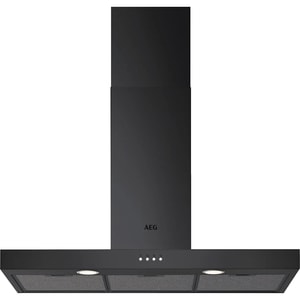
Chimney hood • Width: 90 cm • Extraction (max): 600 m³/h
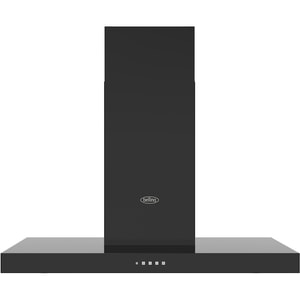
Type: Chimney hood • Width: 90 cm • Extraction (max): 580 m³/h
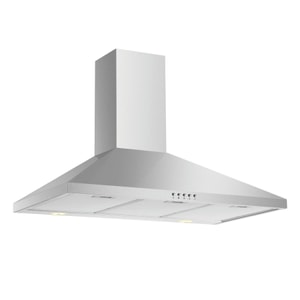
Type: Chimney hood • Width: 90 cm • Extraction (max): 468 m³/h
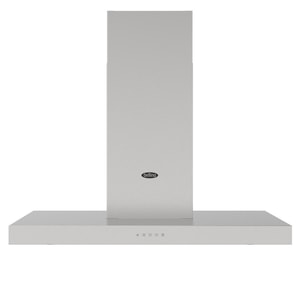
Type: Chimney hood • Width: 90 cm • Extraction (max): 600 m³/h
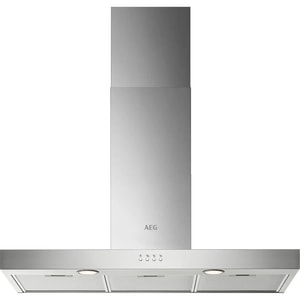
Chimney hood • Width: 90 cm • Extraction (max): 600 m³/h
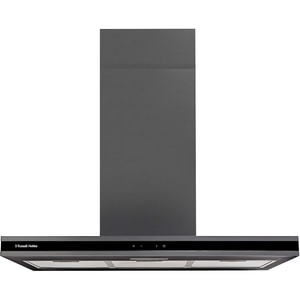
Type: Island hood • Width: 90 cm • Extraction (max): 650 m³/h
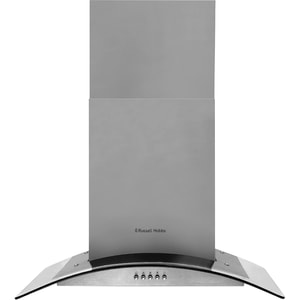
Type: Chimney hood • Width: 90 cm • Extraction (max): 400 m³/h
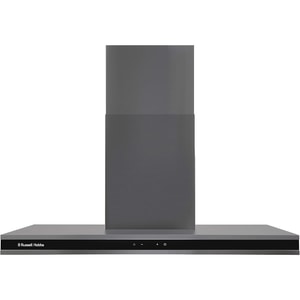
Type: Chimney hood • Width: 90 cm • Extraction (max): 650 m³/h
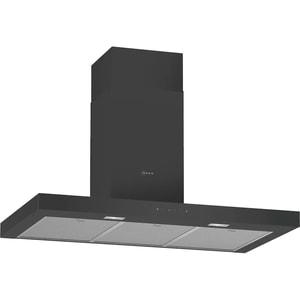
Type: Chimney hood • Width: 90 cm • Extraction (max): 372 m³/h
Chimney or island, what your kitchen layout decides
Almost every 90cm hood is built for one of two installs. A chimney hood mounts flat against a wall above the hob, with a vertical flue covering the ducting up to the ceiling. An island hood hangs from the ceiling over a hob in the middle of the room, so it has to look finished from all four sides and usually costs more for the same extraction. Read More...
If your hob sits on a peninsula or island, you have no choice, you need an island hood. Against a wall, a chimney hood is almost always the better-value pick, and the range of brands and finishes is wider.
How much extraction do you actually need?
Extraction rate is measured in m³/h, the volume of air a hood can move on its highest setting. For a 90cm hood paired with a normal four or five burner hob, anything from around 400 m³/h upwards is workable for everyday cooking. If you fry, wok, or sear often, or you have an open-plan kitchen where smells linger into the living space, aim higher, into the 600 m³/h plus territory.
Worth knowing: the headline figure is the maximum, usually on boost. The setting you'll actually use most is two or three notches down, which is quieter and uses less power. A hood with a higher ceiling gives you more useful output at sensible settings.
Ducted versus recirculating, and why it matters
Ducted (extracted) hoods push cooking air outside through a vent. They're more effective at clearing steam, grease and smells because the air actually leaves the room. Recirculating hoods pass air through a charcoal filter and blow it back into the kitchen. They're the only option if you can't run ducting through an external wall, but charcoal filters need replacing (typically every six to twelve months depending on use) and they handle odour better than steam.
Most 90cm models are convertible, ducted by default with a recirculation kit available. Check the kit isn't an extra you weren't expecting.
Finish, noise and the small things that matter daily
Stainless steel is the safe pick, hides fingerprints less than gloss black but goes with almost any kitchen. Black and dark steel finishes look sharper against pale cabinetry and pair well with induction hobs in the same finish. Whatever you choose, the visible chimney section needs to suit the colour of the wall behind it as much as the hob below.
Noise is the spec people regret ignoring. Max dB(A) figures in the high 60s and 70s sound innocuous on paper, but a hood at 70 dB is loud enough to make conversation across the kitchen island work. If your kitchen is open-plan, a model in the low 60s on max is worth paying more for. Energy class is the other one, an A or A++ hood will cost noticeably less to run if it's on for an hour a day.
Lighting and filters, the parts you'll touch
LED strip or spot lighting under the hood is now standard, but check whether the bulbs are user-replaceable. Grease filters should be dishwasher-safe stainless steel mesh, anything else is a chore. Charcoal filters (recirculating mode only) are consumables, factor a couple of replacements a year into the running cost.
Installing a 90cm hood without surprises
Mounting height above the hob matters: gas hobs typically want 65 to 75 cm of clearance, induction and ceramic 55 to 65 cm. Check the manufacturer's figure before you drill. Ducting runs should be as short and straight as possible, every bend cuts real-world extraction. And a 90cm hood usually needs a 150 mm duct, not a 125 mm, to hit its rated airflow.
Frequently Asked Questions
Yes. A hood should be at least as wide as the hob, ideally a touch wider, so a 90cm hood over a 60cm hob is wasted capture area and visually dominates the wall. Match it to a 90cm hob, a wide induction zone, or a range cooker.
Ducting outside is more effective for steam and grease, full stop. Recirculation is acceptable in flats, internal kitchens, or where punching through an external wall isn't possible, but you'll need to replace charcoal filters regularly and the hood won't shift moisture as well. If ducting is even slightly possible, duct it.
Anything in the high 60s dB(A) is intrusive in an open-plan kitchen, and the 70s are noticeable from the next room. A model in the low 60s on max, or one with a quiet boost mode, is worth the upgrade if you cook with the TV on or have a baby in the house.
For everyday cooking on a 90cm hob, 400 to 500 m³/h is fine. For frying, wok cooking or open-plan kitchens where smells travel, look for 600 m³/h or higher on max. Remember you'll mostly be running it on a middle setting, so headroom is useful.
No, they telescope to fit different ceiling heights, usually within a published range (often roughly 600 to 1000 mm). Check the range against your ceiling-to-hob distance before ordering, especially in older homes with high ceilings or in basements with low ones.
Yes. Black and dark steel finishes are common alongside stainless steel, and the canopy, chimney trim and trim around the controls are usually all the same finish. Pair with the hob and tap finishes for a cleaner look.
Energy class on hoods reflects motor efficiency and lighting together. An A or A++ hood draws meaningfully less power for the same extraction, which adds up if the hood is on for an hour a day. C-rated models tend to be older designs or higher-power motors that haven't been re-engineered.
Stainless mesh grease filters: dishwasher every two to four weeks of normal use. Charcoal filters (recirculating only): replace every six to twelve months, sooner if you fry often. Ignoring either one drops extraction noticeably and leaves smells in the kitchen.