
Haier Washing Machines

Haier washing machines pair Direct Motion drum tech with quiet, energy-efficient cycles, and the line-up runs from compact 8kg drums to family-sized 12kg builds. Compare freestanding and integrated models side by side, in white, anthracite or graphite, and weigh up Series 5 against Series 7 before buying.
- Relevance
- Price: Low - High
- Price: High - Low
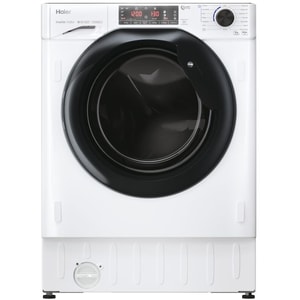
White • Wash Capacity: 9 kg • Maximum Spin Speed: 1600 rpm
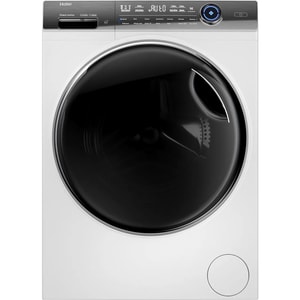
Colour: White • Wash Capacity: 10 kg • Maximum Spin Speed: 1400 rpm
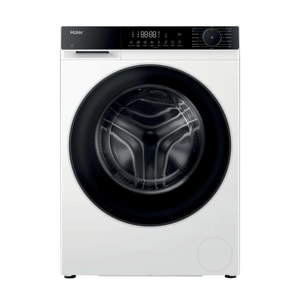
Colour: White • Wash Capacity: 12 kg • Maximum Spin Speed: 1400 rpm
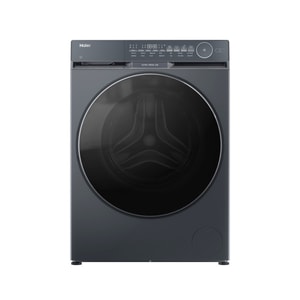
Colour: Anthracite • Wash Capacity: 10 kg • Maximum Spin Speed: 1400 rpm
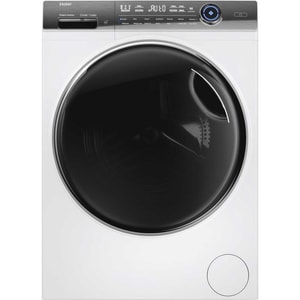
Colour: White • Wash Capacity: 10 kg • Maximum Spin Speed: 1400 rpm
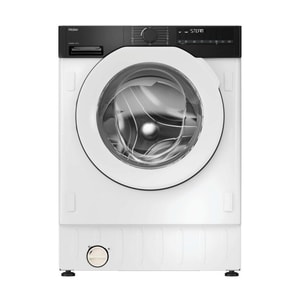
Colour: White • Wash Capacity: 9 kg • Maximum Spin Speed: 1600 rpm
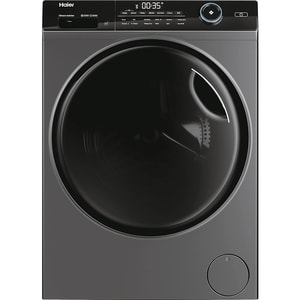
Anthracite • Wash Capacity: 8 kg • Maximum Spin Speed: 1400 rpm
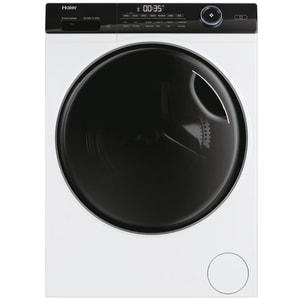
White • Wash Capacity: 10 kg • Maximum Spin Speed: 1400 rpm
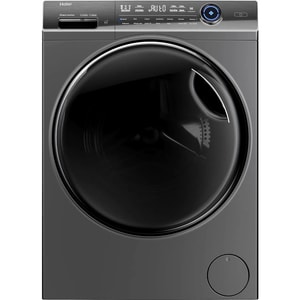
Colour: Anthracite • Wash Capacity: 11 kg • Maximum Spin Speed: 1400 rpm
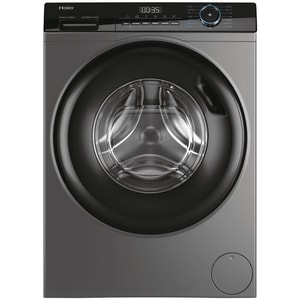
Graphite • Wash Capacity: 10 kg • Maximum Spin Speed: 1400 rpm
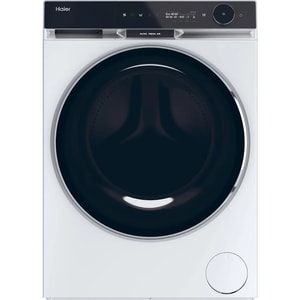
Colour: White • Wash Capacity: 11 kg • Maximum Spin Speed: 1400 rpm
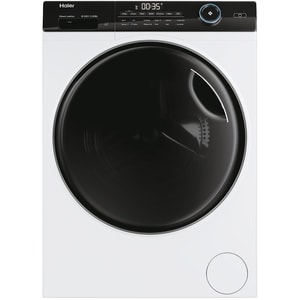
White • Wash Capacity: 8 kg • Maximum Spin Speed: 1400 rpm
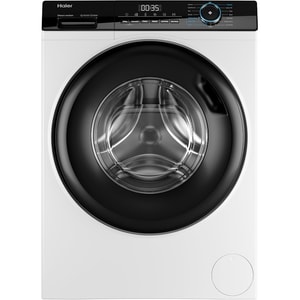
White • Wash Capacity: 10 kg • Maximum Spin Speed: 1400 rpm
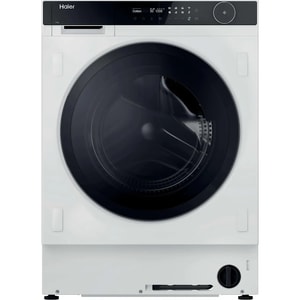
Colour: White • Wash Capacity: 10 kg • Maximum Spin Speed: 1400 rpm
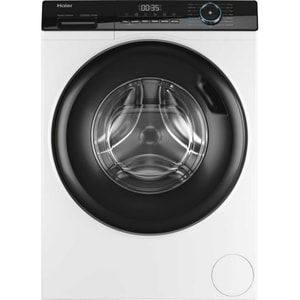
Colour: White • Wash Capacity: 9 kg • Maximum Spin Speed: 1400 rpm
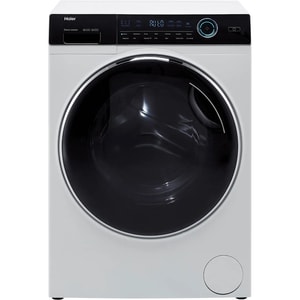
Colour: White • Wash Capacity: 8 kg • Maximum Spin Speed: 1400 rpm
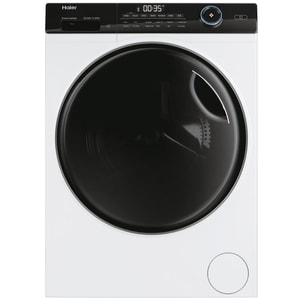
Colour: White • Wash Capacity: 9 kg • Maximum Spin Speed: 1400 rpm
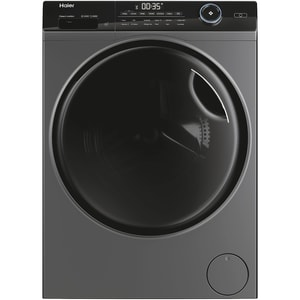
Anthracite • Wash Capacity: 10 kg • Maximum Spin Speed: 1400 rpm
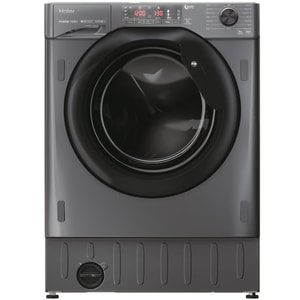
Anthracite • Wash Capacity: 9 kg • Maximum Spin Speed: 1600 rpm
Check Our Full Range Of Washing Machines Washing Machines
Pick capacity by laundry pattern, not household headcount
The honest rule on Haier capacity is to size by what you wash, not how many people live there. Two adults who run a wash every other day are fine on 8kg. A family of four who hate dragging duvets to a launderette want 10kg minimum, because a 13.5 tog king-size needs a 9kg drum on its own and you'll want headroom around it. Sports kit, towels and dog bedding eat capacity faster than clothes do, so if any of those are weekly fixtures, size up one tier. The 11kg and 12kg Haier washers earn their keep when you'd rather run two big washes a week than five small ones, and the energy maths usually works in their favour at full loads. Smaller drums spun at 1400rpm finish faster and use less water per cycle, so don't over-buy if your laundry is mostly clothes and the occasional double duvet. Read More...
Freestanding or integrated, what you actually trade
Freestanding Haier washers give you the full capacity range, the colour choice, and the simpler swap when the machine eventually goes. Integrated Haier models keep a fitted kitchen looking fitted, hide the controls behind a furniture door, and dampen sound by another notch because the cabinetry absorbs vibration. The trade is real: integrated tops out lower on capacity, costs more for the same wash spec, and the install is fussier because you're matching hinge points and door weight to the kitchen. If the kitchen is handle-less and you've spent money making it look seamless, integrated is the right call. If you'll redo the kitchen before the washer dies, freestanding gives you more drum for your money.
Direct Motion, what it changes day to day
Direct Motion is Haier's belt-free drive. The motor turns the drum directly instead of through a rubber belt, which removes the part that statistically fails first on a washing machine. Day to day, you'll notice three things: noticeably quieter spin, less floor walk on uneven kitchen tiles, and a longer motor warranty than the belt-driven equivalents. If the machine lives in an open-plan kitchen, in a utility off a bedroom wall, or on a suspended timber floor, Direct Motion is the upgrade that pays back in lived experience rather than spec-sheet bragging.
Series 5 or Series 7, where the money goes
Series 5 covers the cycles most households actually use, A-rated efficiency, and 1400rpm spins. It's the sensible default. Series 7 layers on faster 1600rpm spins, refined wash programmes, steam refresh on selected models, and tighter noise figures. The upgrade most shoppers feel is the spin: 1600rpm pulls roughly 10 to 15 percent more water out than 1400rpm, which is a real cut in tumble-dry time and energy. Steam refresh is genuinely useful if you wear a lot of work shirts and want to skip an iron, less so if everything you own goes through a tumble dryer anyway. If you line dry, Series 5 is rarely the wrong answer.
Are Haier washing machines any good?
Haier sits in the upper-mid bracket on UK shop floors: cheaper than Bosch or Miele on like-for-like spec, pricier than the budget end, and increasingly the brand pinched in when shoppers want Direct Motion without paying premium money. Reliability has climbed since Haier moved Direct Motion across more of the line, the 12-year motor warranty on those models is competitive, and the A-rated efficiency is honest rather than a label trick. The watch-out is service depth: Haier's UK engineer network is smaller than the legacy brands, so if you live somewhere repair access is patchy, factor that into the buying decision before the spec sheet.
White, anthracite or graphite
Colour matters more on a washing machine than people admit, because the machine sits at eye level for years. White still suits most utilities and traditional kitchens. Anthracite reads as a softer dark grey and pairs cleanly with stone worktops and matt cabinetry. Graphite is the deepest of the three and works hardest in a darker, modern scheme. Darker finishes show limescale splash and detergent drips faster than white does, so if your water's hard, plan on wiping the door rim down weekly to keep the finish looking new.
Frequently Asked Questions
It's a real reduction, not a sticker. Belt-driven washers transmit motor noise through the belt and pulley, which is the source of the higher-frequency whine on spin. Direct Motion removes that path, so spin noise drops by a few decibels and shifts lower in pitch, which the ear reads as much quieter. You'll notice it most on the final spin and on hard floors.
Look at what you've been splitting into two loads on the old machine. If you've been running a separate towels-and-bedding wash because everything else wouldn't fit, 10kg lets you consolidate, which usually saves an entire wash a week. If the old 7kg or 8kg was only ever full on bedding day, 9kg is enough headroom and costs less to run on the smaller mid-week loads.
Not automatically. Integrated washers have a maximum furniture door weight (usually around 16 to 19kg depending on model) and need the hinge mounts to line up with the holes drilled in the washer fascia. Solid-wood doors and chunky shaker fronts can exceed the limit. Check the fascia spec sheet against your kitchen door weight and hinge centres before ordering, and account for the plinth height your kitchen uses.
Yes, more than most upgrades. The faster spin extracts roughly 10 to 15 percent more water than 1400rpm, which translates directly into shorter tumble-dry cycles and lower drying energy. Over a year of regular use, the saving on the dryer side typically outweighs the price difference at purchase. If you line dry, the gain is smaller and the upgrade is harder to justify.
The A-rated label is calculated on a mixed eco programme at 40°C, and Haier publishes kWh per 100 cycles on the energy label of every machine. As a rough planning figure, an 8kg A-rated washer runs at around 45 to 55 kWh per 100 cycles, a 10kg around 55 to 65 kWh. Multiply by your unit rate and your weekly wash count for an honest annual estimate, and remember temperature choice changes the figure more than capacity does.
Direct Motion Haier models are built around a motor warranty of up to 12 years, and the bearings and drum are the next limit on lifespan. Realistic working life is 8 to 12 years if you descale occasionally, leave the door ajar between washes to dry the seal, and avoid chronic overloading. The integrated models tend to live longer because the cabinetry holds them more rigidly during high spins.
Slightly. Darker finishes show limescale, fabric softener drips and detergent splash more obviously than white does, and the door rim is the worst offender. A weekly wipe with a microfibre cloth keeps the finish looking new. Avoid abrasive sprays and bleach-based cleaners on the painted panels, both of which dull the matt sheen over time.
The internal heater rating affects how quickly the drum reaches hot-wash temperatures, which matters if you regularly run 60°C or 90°C cycles for towels, bedding or hygiene washes. Most current Haier models use a higher-output heater that hits temperature faster and holds it more steadily, which improves the result on heavily soiled loads. If you only ever run cold and 30°C cycles, the difference is academic.