
Integrated Washer Dryers
What it leaves on the table: "the trick is" is a touch folksy and overlaps with the buyer's guide opener, which also lists three considerations. The intro should set the page up; the guide should pay it off. Right now they say similar things in similar shapes. Also "freeing floor space" is a soft benefit; the harder shopper truth is that the choice is really about the recess and the wash/dry pair working for your actual laundry rhythm.
- Relevance
- Price: Low - High
- Price: High - Low
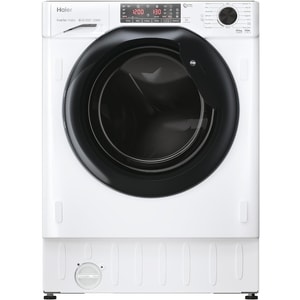
Wash capacity: 9 kg • Dry capacity: 5 kg • Max spin speed: 1600 rpm
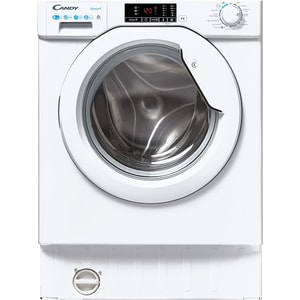
Wash capacity: 8 kg • Dry capacity: 5 kg • Max spin speed: 1400 rpm
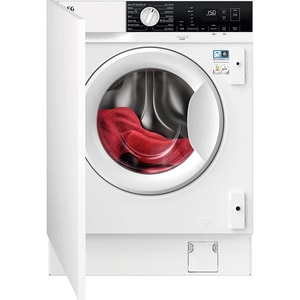
Wash capacity: 8 kg • Dry capacity: 4 kg • Max spin speed: 1600 rpm
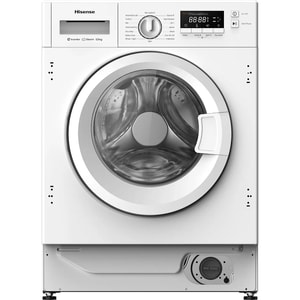
Wash capacity: 8 kg • Dry capacity: 6 kg • Max spin speed: 1400 rpm
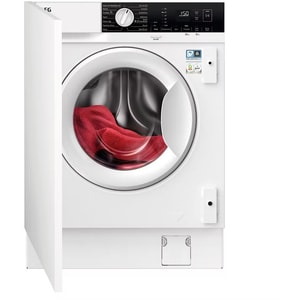
Wash capacity: 7 kg • Dry capacity: 4 kg • Max spin speed: 1600 rpm
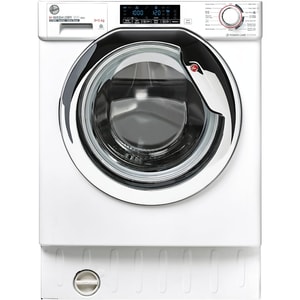
Wash capacity: 9 kg • Dry capacity: 5 kg • Max spin speed: 1600 rpm
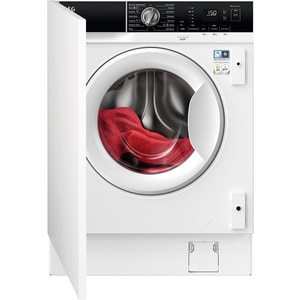
Wash capacity: 7 kg • Dry capacity: 4 kg • Max spin speed: 1551 rpm
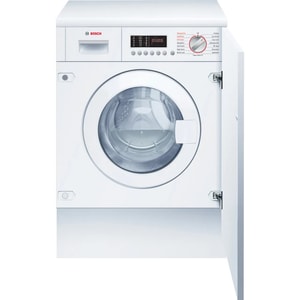
Wash capacity: 7 kg • Dry capacity: 4 kg • Max spin speed: 1400 rpm
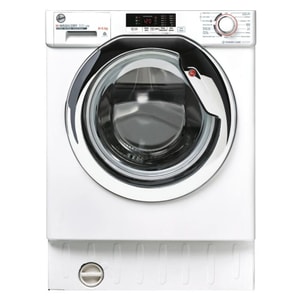
Wash capacity: 8 kg • Dry capacity: 5 kg • Max spin speed: 1400 rpm
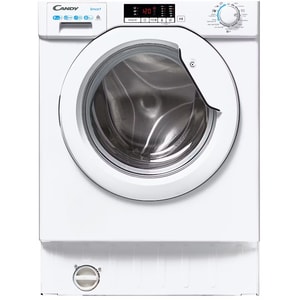
Wash capacity: 9 kg • Dry capacity: 5 kg • Max spin speed: 1400 rpm
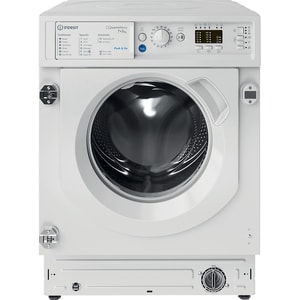
Wash capacity: 7 kg • Dry capacity: 5 kg • Max spin speed: 1400 rpm
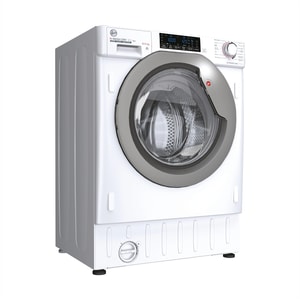
Wash capacity: 9 kg • Dry capacity: 5 kg • Max spin speed: 1600 rpm
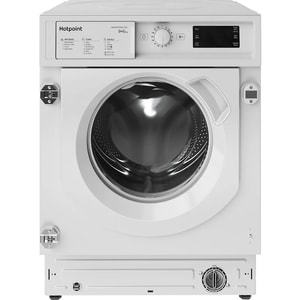
Wash capacity: 9 kg • Dry capacity: 6 kg • Max spin speed: 1400 rpm
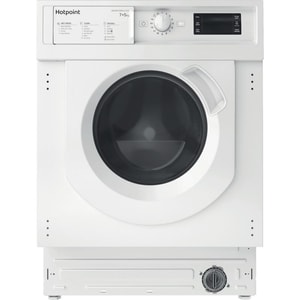
Wash capacity: 7 kg • Dry capacity: 5 kg • Max spin speed: 1400 rpm
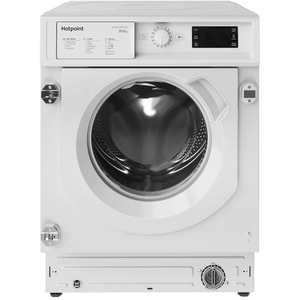
Wash capacity: 8 kg • Dry capacity: 6 kg • Max spin speed: 1400 rpm
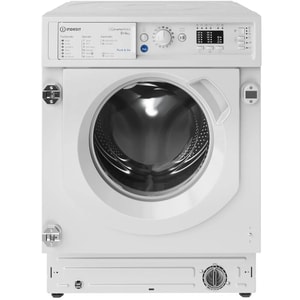
Wash capacity: 8 kg • Dry capacity: 6 kg • Max spin speed: 1400 rpm
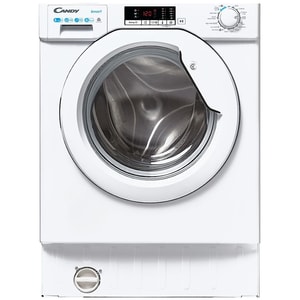
Wash capacity: 8 kg • Dry capacity: 5 kg • Max spin speed: 1400 rpm
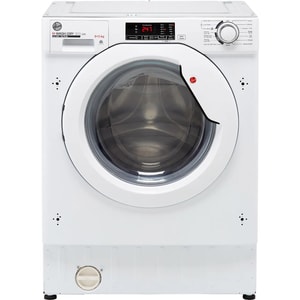
Wash capacity: 9 kg • Dry capacity: 5 kg • Max spin speed: 1400 rpm
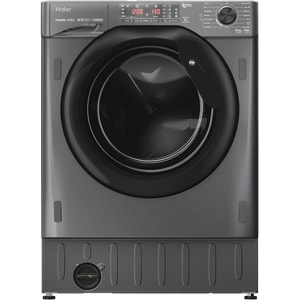
Wash capacity: 9 kg • Dry capacity: 5 kg • Max spin speed: 1600 rpm
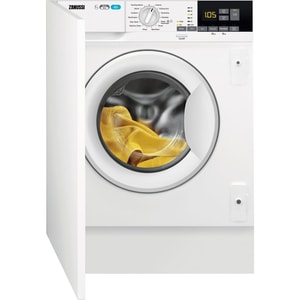
Wash capacity: 7 kg • Dry capacity: 4 kg • Max spin speed: 1600 rpm
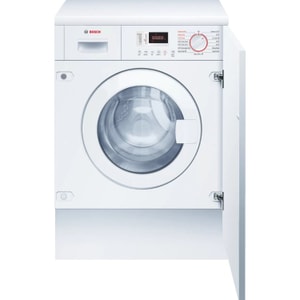
Wash capacity: 7 kg • Dry capacity: 4 kg • Max spin speed: 1400 rpm
Compare integrated and freestanding options. Check washer dryer prices and offers across all brands.
How do you choose the right integrated washer dryer?
Picking a fitted washer dryer is mostly a question of three things: the recess it slots into, the wash and dry capacity pair, and how you handle drying day to day. Get those right and the cycle list takes care of itself. Read More...
Will it actually fit your kitchen recess?
Most integrated washer dryers sit inside a standard cabinet at roughly 82 cm high, 60 cm wide and 54 to 56 cm deep, with a furniture door fixed to the front. Measure the recess, the plinth height and the door swing before anything else. Check the manufacturer's drilling template against your cabinet door weight, and leave a service loop on the hoses so you can pull the machine forward for filter access. A standard UK 13 A socket, a cold feed and a standpipe or sink spigot finish the job.
A true slimline washer dryer is rare in integrated form because the cabinet depth is fairly fixed. If your carcass is shallower than 55 cm or you have an awkward galley layout, a freestanding model under a worktop will usually give you more options.
What capacity pair suits your household?
Integrated washer dryers quote two numbers: wash capacity and dry capacity. Common pairs are 7/4 kg, 7/5 kg, 8/5 kg, 8/6 kg and 9/5 or 9/6 kg. The wash figure is the absolute drum maximum. The dry figure is what you can take through a full wash and dry cycle in one go, usually around two-thirds of the wash load.
A couple or single person can comfortably live with a 7 kg or 8 kg wash. Families running daily school uniform and bedding rounds will lean on 9 kg. If you regularly part-dry, hang and finish off in a tumble, you can size up the wash and use the dryer in shorter chunks rather than full Wash+Dry runs.
Spin speed, drying type and how dry it gets you
Higher spin pulls more water out before drying starts, which cuts time and energy. 1400 rpm is the workhorse, 1600 rpm noticeably shortens drying for thicker items, and the difference is most visible on towels, jeans and bedding.
Every integrated washer dryer in this category is a condenser washer dryer, often water-cooled. That means the dryer uses mains water during the drying phase to cool the condenser, which adds to your water bill on heavy laundry weeks. If your usage is high, look at a freestanding heat pump model as the alternative: more efficient, but it needs floor space.
Features worth paying more for, and ones you can skip
Sensor drying is on every integrated unit here and earns its keep, stopping the cycle when clothes hit the chosen dryness level rather than running on a fixed timer. Steam refresh cycles relax fibres on lightly worn items and reduce ironing, useful if your routine is shirts and uniforms. Anti-crease tumbles at the end matter more if you can't unload straight away.
Wi-Fi connectivity, on a small share of stock, gives you remote start and cycle alerts. Useful with off-peak tariffs, optional otherwise. Inverter motors with published dB figures at wash and spin make a real difference if the machine sits in an open-plan kitchen.
Which brands are worth knowing?
Brands you'll typically see in integrated washer dryers include Bosch and AEG at the upper end, where build quality, motor refinement and longer warranties tend to justify the spend. Hotpoint, Indesit, Hoover, Candy and Haier sit in the mid-market with strong capacity-for-money. Zanussi and Hisense round things out with specific recess options. Match the brand to how long you plan to keep the machine: heavy daily users get more from premium German engineering, lighter users get good value from mid-market models.
Frequently Asked Questions
Almost, but not blindly. The carcass needs to be roughly 60 cm wide and 82 cm high inside, with at least 54 to 56 cm of depth for the machine plus hoses behind. The furniture door has to be within the weight range stated in the manual, with hinges and a drilling template that line up with the fascia. Heavy solid-timber doors can exceed the spec on entry-level models, so check before committing to a kitchen door style.
Most integrated washer dryers run a water-cooled condenser, so mains water cools the dryer's air during the drying phase. It's normal and quiet, but it does add to water use on heavy laundry days. You can't switch it off, but you can reduce overall consumption by spinning at a higher rpm before drying, drying full but not overloaded loads to the stated dry capacity, and using cupboard-dry rather than extra-dry where the items don't need it. If water cost is a deciding factor, a freestanding heat pump dryer paired with a separate washing machine will use less.
The wash figure (7, 8 or 9 kg here) is the drum's wet maximum. The dry figure (4, 5 or How much can you actually wash and dry in one go?6 kg) is what the machine can dry properly in a single combined cycle. So a 9/6 kg model will wash 9 kg of cottons, but if you want to wash and dry without unloading you cap at 6 kg. Households that part-dry, hang and finish off in the tumble can run a fuller wash and dry in two passes.
Counterintuitively, the cabinet usually damps a little sound. The bigger variable is the motor. Inverter direct-drive designs run quieter at spin and have lower published dB figures. Look for spin noise in the low 70s dB(A) and a quiet or night cycle if you run laundry late. If your washer dryer is feet from a sofa in an open-plan kitchen, that 5 dB difference between models is audible.
Every integrated washer dryer in this category uses a condenser dryer, typically water-cooled. Condenser dryers heat the air directly, which is fast but uses more energy and (with water cooling) more water. Heat pump technology, common in standalone tumble dryers, recycles warm air and uses far less energy, but is rare in combined washer dryers and effectively absent from integrated formats. If energy class is the priority over the integrated look, separates are usually the better answer.
If your kitchen already has a working washing machine slot with a 13 A socket, cold feed and standpipe, a confident DIYer can swap a unit in. The fiddle is the furniture door alignment with adjacent cabinets, and getting the plinth grille and ventilation gap right per the manual. New installs (cutting in a feed, fitting an isolation valve, adding a standpipe) are plumber territory. Keep the plinth removable so filters and pumps stay accessible.
A reasonable expectation is 7 to 10 years for the wash side and a little less for the dryer element, which works harder. Premium brands and inverter motors tend to stretch that. Lifespan is heavily affected by overloading the dry cycle: pushing a 5 kg dry capacity to 6 or 7 kg of wet washing strains the motor, heater and bearings. Running a monthly maintenance wash, cleaning the door seal and emptying the lint filter every cycle make a measurable difference.
If you have the space for both and run laundry daily, separates win on speed, drying capacity and energy use. You can wash one load while the previous one dries. A combined integrated washer dryer wins on footprint, cabinet integration and households where laundry happens in batches. The honest test: how often do you currently wash two loads back-to-back? Often, go separates. Rarely, a single integrated unit covers it.