
Russell Hobbs Microwaves

Russell Hobbs microwaves cover the everyday end of the kitchen: simple solo models for reheats and defrosting, plus combination ovens that grill and bake when one appliance has to do more. Sizes run from compact 17L counters to roomier 23–25L cavities, in black, white or stainless steel.

- Relevance
- Price: Low - High
- Price: High - Low
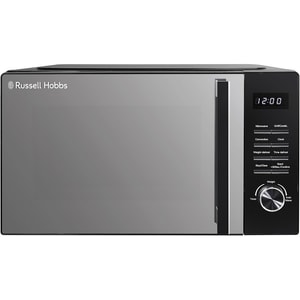
Type: Combination • Capacity: 23 L • Microwave Power: 900 W
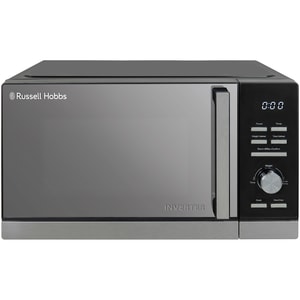
Type: Solo • Capacity: 25 L • Microwave Power: 900 W
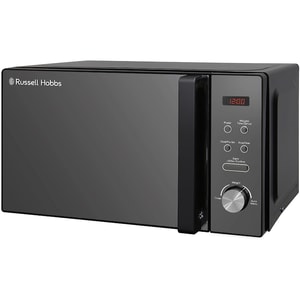
Type: Solo • Capacity: 20 L • Microwave Power: 800 W
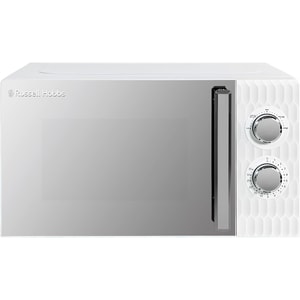
Solo Microwave • Capacity: 17 L • Power: 700 W
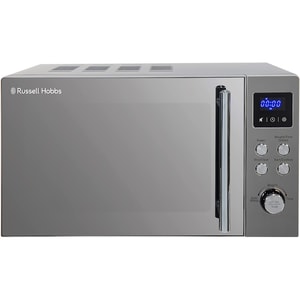
Type: Solo • Capacity: 17 L • Microwave Power: 700 W
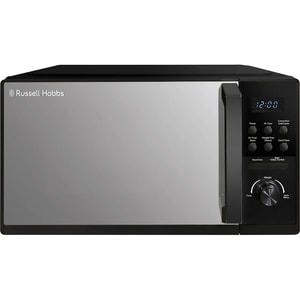
Type: Combination • Capacity: 25 L • Microwave Power: 900 W
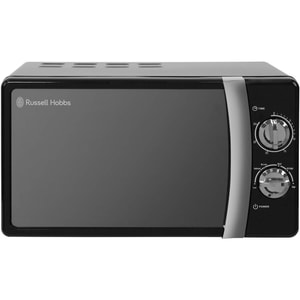
Type: Solo • Capacity: 17 L • Microwave Power: 700 W
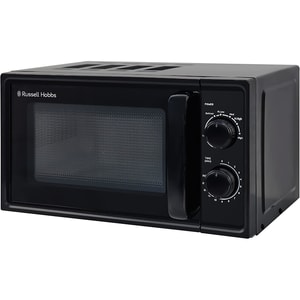
Type: Solo • Capacity: 17 L • Microwave Power: 700 W
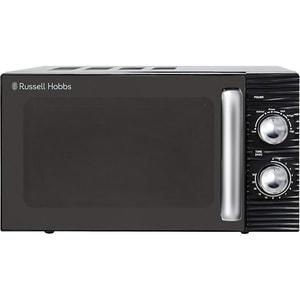
Type: Solo • Capacity: 17 L • Microwave Power: 700 W
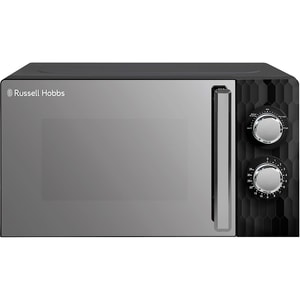
Solo Microwave • Capacity: 17 L • Power: 700 W
Solo, grill or combination, which one earns its space?
A solo microwave is the safest pick if you mostly reheat, defrost and steam veg. It heats fast, costs less, and the controls stay out of your way. If you want crisper finishes (cheese on toast, pasta bakes, sausages with colour), look for a model with a grill element. A combination model adds a fan element, so you can roast a small joint, bake a tray of cookies, or crisp pastry in less time than the main oven. Combis suit smaller kitchens that want one box doing two jobs. Read More...
How often will the grill or fan actually come on?
Be honest about your week. If grilling and baking are weekly habits, a combination justifies the extra spend and worktop depth. If they're rare, a solo keeps it simple and frees the budget for a bigger cavity or better controls.
What capacity matches your real plates?
A 17L Russell Hobbs microwave is genuinely compact, ideal for studios, small kitchens, caravans and student rooms, fine for mugs, bowls and side plates. A 20L Russell Hobbs microwave is the everyday workhorse for one to three people and takes most dinner plates. A 23L Russell Hobbs microwave gives you elbow room for casserole dishes and Pyrex, and a 25L combination handles small roasting trays and pie dishes when grill or fan are doing the cooking. Always measure your most-used plate against the turntable diameter before you commit.
Does power level change the cook, or just the speed?
Wattage is mostly about speed and evenness. A 700W microwave will reheat and defrost properly, just allow longer than the back-of-pack timing aimed at 800W. An 800W microwave hits the times printed on most ready-meals. A 900W microwave shortens family-portion reheats and pairs well with combination cooking, where the higher ceiling helps the grill and fan work in tandem with the magnetron.
Black, white or stainless, which finish lives best in your kitchen?
A black Russell Hobbs microwave anchors darker schemes and hides splash marks between wipes. A white Russell Hobbs microwave keeps a compact corner feeling lighter and pairs cleanly with pale shaker units. A stainless steel Russell Hobbs microwave, like the Buckingham line, suits utility-style kitchens and brushed-metal hobs and kettles. All three wipe down with a soft cloth and warm soapy water.
Controls, safety and the boring bits that matter daily
A Russell Hobbs digital microwave gives you presets, weight defrost, a 30-second quick start and a child lock, useful in a busy kitchen. Dial-controlled solos are simpler if family members aren't keen on menus. Either way, leave a few centimetres of clearance on the sides, top and rear for ventilation, and plug into a standard 13A socket clear of the hob.
Frequently Asked Questions
Yes, for one or two it's usually fine. A 17L cavity takes mugs, bowls and standard side plates, which covers most reheats, porridge, soup and frozen meals. If you regularly use a full dinner plate or large round Pyrex, step up to 20L or 23L so the dish clears the turntable.
A solo only microwaves: fast, simple, cheaper. A combination adds a grill and a fan element, so it can brown, crisp and roast as well as reheat. Combis are heavier, deeper and pricier, but they earn their place in small kitchens where a separate oven or grill isn't realistic.
Yes. Most UK ready-meal timings are written for 800W, so an 800W microwave matches the back-of-pack instructions out of the box. A 700W model needs a little longer; a 900W model can shave time off, especially for family portions and big bowls of pasta.
Leave a few centimetres on the sides, top and rear so warm air can vent, and check the door swing has a clear arc. Avoid placing it directly above a hob or beside the kettle steam path. A flat, level, heat-resistant surface near a 13A socket is ideal.
If you defrost by weight, use auto programmes for rice and jacket potatoes, or want a 30-second quick start, the digital panel pays back daily. If you mostly punch in a minute or two and pull the door open, dials are quicker to learn and have fewer things to go wrong.
Mostly looks, but smooth white surfaces show curry and tomato splashes sooner, while satin black hides marks between wipes. Stainless steel resists scuffs but shows fingerprints. All three clean with warm soapy water and a soft cloth; avoid abrasives on any of them.
For one or two trays, often yes. A combination can roast a small joint of chicken, bake a few potatoes or crisp a pie, using the fan and grill alongside microwave power. It won't match a full oven on capacity or browning evenness, but it covers solo-cook nights and small households well.
Wipe the cavity when it's cool, clean the door seal so it sits flush, and steam the inside occasionally with a bowl of water and lemon to lift baked-on splatter. Don't run it empty, don't use metal-trimmed dishes, and keep the rear vents clear of cloths and packaging.