
Samsung Microwaves

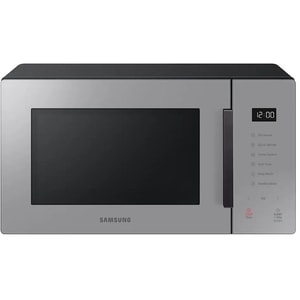
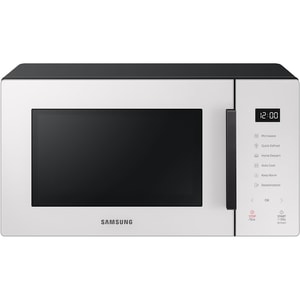
Samsung's microwave range covers compact 23L solos for couples and small kitchens through to 32L combination ovens that grill and bake. Power runs from 800W up to 1000W, with finishes spanning black, white, silver, stainless steel and the softer Bespoke Clean Grey and Cotta White panels.

- Relevance
- Price: Low - High
- Price: High - Low
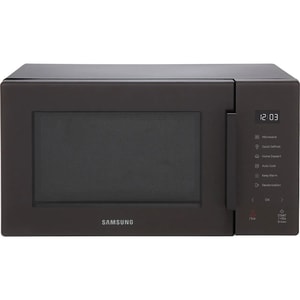
Solo Microwave • Capacity: 23 L • Power: 800 W
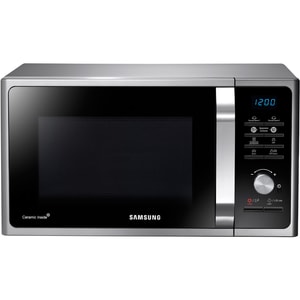
Solo Microwave • Capacity: 23 L • Power: 800 W
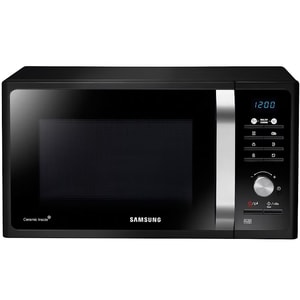
Solo Microwave • Capacity: 23 L • Power: 800 W
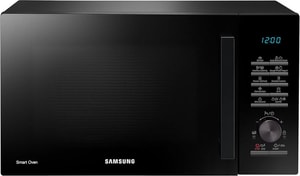
Type: Combination • Capacity: 28 L • Microwave Power: 900 W
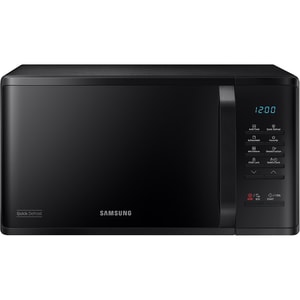
Type: Solo • Capacity: 23 L • Microwave Power: 800 W
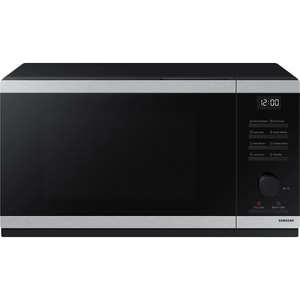
Type: Solo • Capacity: 23 L • Microwave Power: 800 W
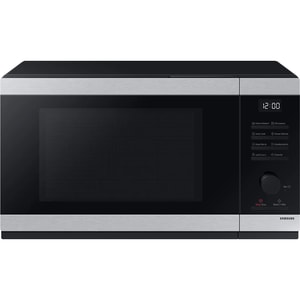
Type: Solo • Capacity: 32 L • Microwave Power: 1000 W
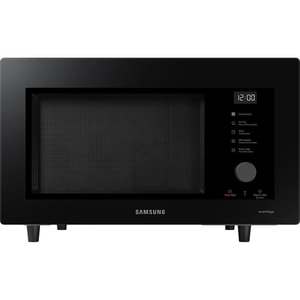
Type: Combination • Capacity: 32 L • Microwave Power: 900 W
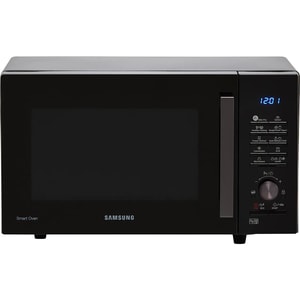
Type: Combination • Capacity: 28 L • Microwave Power: 900 W
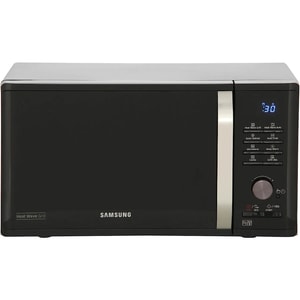
Type: Solo With Grill • Capacity: 23 L • Microwave Power: 800 W
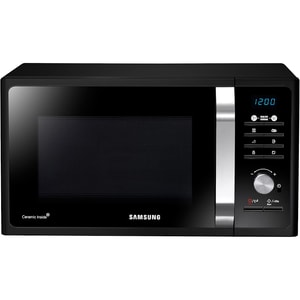
Type: Solo • Capacity: 23 L • Microwave Power: 800 W
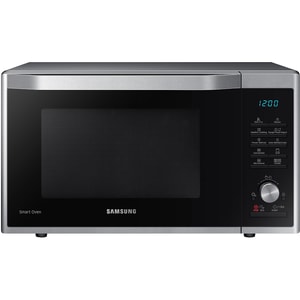
Type: Combination • Capacity: 32 L • Microwave Power: 900 W
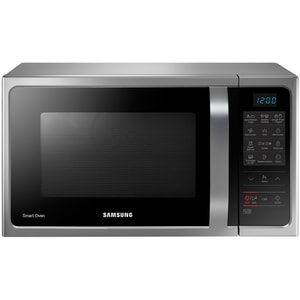
Type: Combination • Capacity: 28 L • Microwave Power: 900 W
Solo, grill or combination, which type fits how you cook?
A solo Samsung microwave reheats, defrosts and cooks at speed. If your oven already handles roasting and baking, a solo is usually all you need and it keeps the counter footprint smaller. A solo with grill adds a heating element on top, useful for browning cheese on a jacket potato or finishing a lasagne without firing up the main oven. A combination Samsung microwave goes further, layering convection on top of microwave and grill so it works as a compact second oven. That matters in a flat without a full oven, in a caravan or annexe, or in a busy household where a second hot cavity stops the bottleneck on a Sunday. Read More...
What capacity actually suits your kitchen?
The 23L Samsung models swallow a standard dinner plate and most takeaway containers, and they sit comfortably under a wall cabinet. Step up to 28L and you can fit a casserole dish or a wider Pyrex without rotating awkwardly. The 32L combination models are closer in feel to a small oven, deep enough for a small chicken or a tray bake, but they need real worktop depth and a few centimetres of clearance behind for venting. Measure the alcove before you commit, especially the height with the door open.
Does wattage really change how it cooks?
For straight reheating, the gap between 800W and 1000W is smaller than the marketing suggests, maybe a minute on a bowl of soup. Where it shows up is in even cooking on dense food, defrosting mince, and reheating thicker leftovers without a cold core. If you batch-cook, lean to 900W or 1000W. If the microwave mainly does mugs of porridge and cups of tea, 800W is fine.
Black, white, silver or Bespoke, which finish lasts?
Stainless steel and silver hide fingerprints less well than darker finishes but wipe clean easily. Black and charcoal Samsung microwaves disappear into dark kitchens but show dust and splash marks faster. The Bespoke Clean Grey and Cotta White models are the softer option for kitchens leaning toward muted, painted-cabinet looks. Whichever you pick, check the interior, ceramic enamel cavities resist staining from tomato sauce and curry better than painted ones.
Features worth paying more for
Auto-cook programmes earn their keep if you reheat the same things often, since they handle power and time on your behalf. Eco mode trims standby draw, useful given microwaves spend most of their lives idle. A child lock matters with toddlers in the kitchen. Door style is a quiet differentiator too, the wider Samsung pull-down handles are easier with wet or oven-glove hands than the push-button alternatives.
Frequently Asked Questions
For reheating and defrosting, yes, a 23L cavity fits a standard dinner plate and most ready-meal trays. Where it gets tight is reheating a casserole or family-sized lasagne dish, since the turntable diameter limits how wide a dish can sit. Families who batch-cook often prefer 28L or 32L for that reason.
A solo only microwaves. A combination adds a grill element and a convection fan, so it can roast, bake and brown. Combinations cost more, draw more power, and take up more space, but they replace a second oven in kitchens that don't have one.
No, the Bespoke range is a finish choice, the cooking technology behind Clean Grey and Cotta White is the same as the standard finishes. The decision is purely about how the front panel suits your cabinets.
Generally no. Freestanding microwaves vent from the sides and rear, so trapping them in a tight cabinet can cause overheating and shorten the lifespan. If a microwave needs to sit inside a unit, look for a model specifically rated for built-in installation, or use a trim kit designed for that exact model.
Wipe spills while the cavity is still warm with a damp cloth and a little washing-up liquid. For baked-on splatter, microwave a bowl of water with lemon for a couple of minutes to loosen residue. Avoid abrasive scourers, especially on enamel interiors, since scratching the cavity coating shortens its life.
A little. Reheating times on packaging are usually quoted at 800W, so an 800W model matches the instructions, while higher-wattage models heat faster but can dry edges if you don't dial them down. For thick or dense food, higher wattage cooks more evenly.
For one or two-person households, often yes, especially for tray bakes, jacket potatoes, roast chicken pieces and reheats. For families cooking a full Sunday roast with multiple trays, the cavity is too small to do everything at once, so most owners use it as a fast second oven rather than a sole oven.
All UK models run on a standard 13A three-pin socket. Combination and 1000W models pull more current under load, so it is sensible to give them a dedicated socket rather than sharing a fused extension with a kettle or toaster.