
Cordless vs petrol vs robot vs electric lawnmowers: the practical guide to choosing the right mower
 27/01/2026
Choosing a lawnmower sounds straightforward until you realise you are not only choosing “a mower”. You are choosing a routine. Do you want to plug in and go, charge and go, fuel and maintain, or let a robot handle regular upkeep while you do the edges?
This guide is written for real gardens and real constraints: awkward corners, narrow gates, slopes, long spring growth, and the simple desire to finish mowing without turning it into a project. If you want a broad starting point for outdoor kit, Garden & Patio is a useful place to browse the wider category.
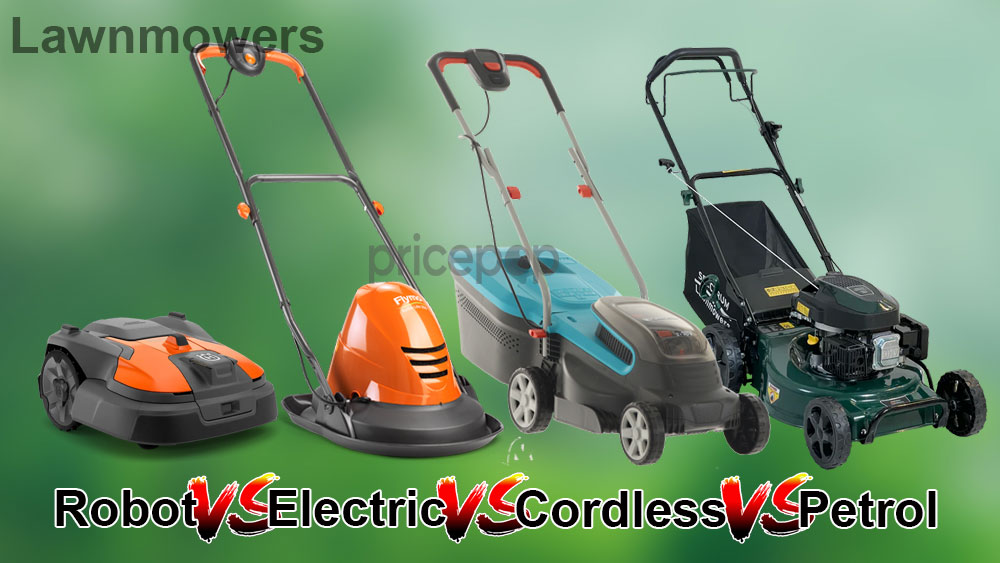
Start with your lawn and your tolerance for setup, because that decides the best power type
Most buying regret comes from choosing a mower that fights your layout. Before you look at brands, get clear on four practical factors:
1) Lawn size and shape: open and rectangular, or lots of corners and borders?
2) Access and storage: can you roll a wide mower through your gate, and where will it live?
3) Grass conditions: do you often mow long grass, slightly damp grass, or uneven patches?
4) Your tolerance for setup: are you happy managing a cable, charging batteries, or handling petrol and maintenance?
If your lawn is small and you have a nearby socket, a corded electric lawnmower for a small garden can be the simplest “just get it done” option. If the lawn has lots of obstacles or you want freedom without trailing cables, cordless can be a better fit. If you have a larger lawn or you regularly tackle thicker growth, petrol can still be the most forgiving for long sessions. If you want maintenance mowing with minimal weekly effort, robot lawnmowers are designed to keep the lawn consistently tidy, but they come with setup and boundary considerations.
If you are ready to explore categories alongside this guide, Garden Lawnmowers is the natural hub for all mower types in one place.
The four mower types compared: where each one genuinely fits
Table 1 below is a grounded comparison to help you avoid buying on marketing claims alone.
Table 1: Lawnmower type comparison (real-world strengths, trade-offs, and best fit)
| Mower type | Best for | Strengths you will notice weekly | Trade-offs to accept | Common long-tail fit |
|---|---|---|---|---|
| Corded electric | Small to medium lawns with a reachable socket | Predictable power, lighter handling, low maintenance | Cable management, extension lead planning, not ideal for very large lawns | “corded electric lawnmower for small garden”, “electric lawnmower for tight corners” |
| Cordless battery | Medium lawns, awkward shapes, quick mowing without a lead | No trailing cable, easy start, often quieter, storage-friendly | Runtime planning, charging time, battery cost over years | “cordless lawnmower with spare battery”, “best cordless lawnmower for medium garden”, “36V 4Ah lawn mower runtime” |
| Petrol | Larger lawns, long sessions, thicker growth, uneven ground | Continuous runtime, strong cutting under load, often self-propelled options | Fuel storage, more maintenance, noise, heavier handling | “self propelled petrol lawnmower”, “petrol lawnmower for long grass”, “petrol mower for uneven garden” |
| Robot | Maintenance mowing for consistently tidy lawns | Regular cuts keep the lawn looking neat, reduces weekly effort | Setup and layout fit, edging still needed, scheduling and safety considerations | “robot lawnmower for uneven garden”, “robot lawnmower for narrow passages” |
Comparison: quick “choose your route” shortcuts
- If you want the simplest ownership and you can live with a cable, corded electric is often the least hassle over time.
- If your priority is freedom and manoeuvrability, cordless is usually the best compromise for everyday lawns, especially when you can add a spare battery.
- If you want long sessions without charging and you regularly mow challenging grass, petrol remains the most forgiving, particularly in self-propelled form.
- If you want the lawn maintained automatically and your garden is suitable, robot mowing can reduce routine effort, but it does not remove all garden jobs.
If you are leaning towards battery, Cordless Lawnmowers is the most relevant place to browse. If your lawn is larger or you want continuous power, Petrol Lawnmowers is the obvious comparison set. If you are exploring automated upkeep, Robot Lawnmowers is the right category to review.
The specs that matter most: cutting width, cutting height, clippings, and the battery questions people really ask
Once you have chosen a mower type, a few specs influence both the finish and the time spent mowing. These are the details that decide whether mowing feels quick or like hard work.
Cutting width: faster is not always better
A wider cutting width can reduce mowing time on open lawns, but it can be a liability in narrow passages or around lots of borders. If you constantly have to reposition the mower to get around obstacles, a slightly smaller cutting width can finish faster in real life because it turns and tracks more easily. When people search “best cutting width for a small lawn”, they are really searching for manoeuvrability.
Cutting height adjustment: the underrated seasonal feature
Being able to raise the cut when grass is growing quickly, or when conditions are dry, can make the lawn look healthier and reduce strain on the mower. Look for height adjustment that you will actually use, not something fiddly that stays on one setting all season.
Grass box vs mulching: how you want to deal with clippings
A grass box gives a tidier finish immediately, but you will empty more often in strong growth. Mulching returns fine clippings to the lawn, which can be convenient and reduce garden waste, but it suits regular mowing where you are cutting little and often. If you search “mulching lawnmower vs grass box”, the practical answer is: collection suits occasional mowing and visible tidiness, mulching suits frequent maintenance.
Rear roller and “stripes”
If you love a striped finish, a rear roller is the feature that makes it easier. It can also help the mower track neatly, but it can add weight and can be less appealing if your lawn has lots of tight turns.
Battery questions that matter (cordless buyers)
Battery specifications can sound abstract, but the questions are predictable:
- “How long will a cordless mower run on one charge?”
- “How many Ah do I need for my lawn?”
- “Is 18V enough, or should I choose 36V?”
Runtime depends on grass length, dampness, cutting height, and how hard the motor works. As a rule of thumb, thicker growth and lower cut heights use more energy. If you want a cordless lawnmower with spare battery because you prefer finishing in one go, that is often a sensible plan for medium lawns. Also consider whether the mower sits on a broader battery platform, because sharing batteries across tools can simplify ownership if you add a strimmer or blower later.
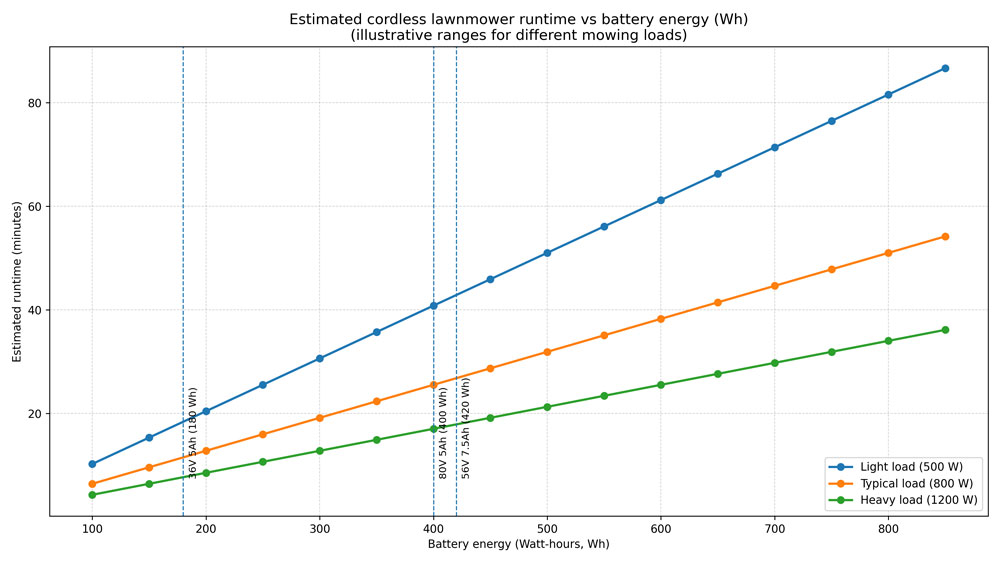
Estimates only: real runtime varies with grass length, cutting height, dampness, slope, blade sharpness, and how often you stop and start.” (This aligns with established mowing guidance that load changes with how much you cut and when.)
Battery energy is calculated as Wh = V × Ah. Runtime is estimated as (battery Wh × usable-energy factor) ÷ mowing load (W).
Light, typical, and heavy loads are illustrative bands based on published electric mower power ranges and the fact power draw rises under tougher cutting conditions.
Safety and ownership reality checks: the five things people forget until it goes wrong
These are not scare stories. They are the practical checks that reduce risk and frustration.
1) Corded electric safety: use RCD protection and treat cable routing as part of the job
Any outdoor power tool use comes with increased risk because cables and water do not mix, and because leads can be damaged. Use proper RCD protection and keep the cable management routine deliberate rather than casual.
2) Petrol ownership: accept maintenance and store fuel correctly
Petrol mowing is convenient for long sessions, but it comes with responsibilities: fuel handling, storage, and routine maintenance. If you want “easy petrol mowing”, self-propelled models can reduce effort, but they do not remove upkeep.
3) Robot mowing and wildlife: schedule thoughtfully
Robot lawnmowers can be excellent at maintenance mowing, but they can present risks to wildlife if used at the wrong times. If you use a robot mower, schedule it to operate during daylight hours and keep the lawn clear of debris. You still need edge work, so many people pair robot mowing with occasional trimming.
4) Noise and timing
If you mow early or late, quieter options are often more practical. Cordless and corded electric are typically more pleasant to use for both the operator and anyone nearby.
5) Storage and handling
A mower you can store neatly will be used more. Folding handles, upright storage, and manageable weight matter more than small spec differences once you live with the machine for a season.
If you are thinking beyond mowing and want your whole outdoor space to feel “finished”, leaf clearing is often the next job people tackle. If you want a read on that, see the PricePop guide Top Leaf Blowers Vacuums Reviewed for Efficiency & Power.
Notes on accuracy and how this guide was written
This article focuses on the decision factors that consistently change the real experience: garden layout, power type trade-offs, cutting width versus manoeuvrability, clippings management, and the practical implications of battery ownership and petrol upkeep. For safety considerations, we cross-checked established electrical safety guidance for outdoor tools and official guidance on safe petrol storage. For robot mowing, we referenced published research and conservation guidance on reducing wildlife risk through sensible scheduling.