
Bosch Washing Machines

Bosch washing machines have built a steady reputation for quiet motors, careful build and sensible energy use. The range covers Series 4 and Series 6, freestanding and integrated formats, and 8 kg, 9 kg and 10 kg drums, so the choice usually comes down to load size, install type and how much programme control you actually want.
- Relevance
- Price: Low - High
- Price: High - Low
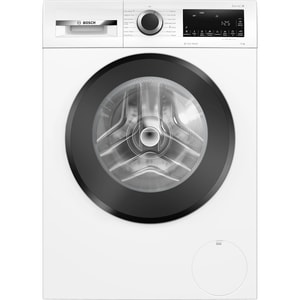
White • Wash Capacity: 9 kg • Maximum Spin Speed: 1400 rpm
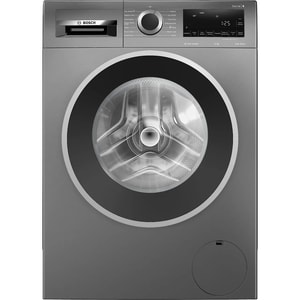
Graphite • Wash Capacity: 9 kg • Maximum Spin Speed: 1400 rpm
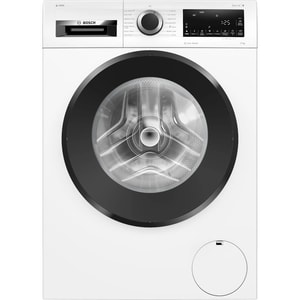
White • Wash Capacity: 9 kg • Maximum Spin Speed: 1400 rpm
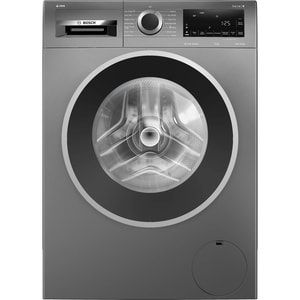
Grey • Wash Capacity: 9 kg • Maximum Spin Speed: 1400 rpm
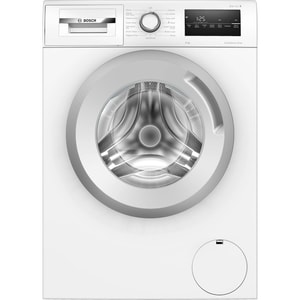
Colour: White • Wash Capacity: 8 kg • Maximum Spin Speed: 1400 rpm
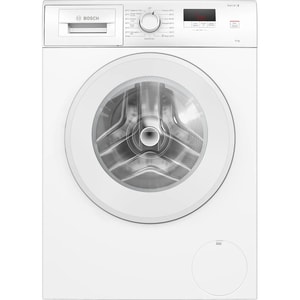
Colour: White • Wash Capacity: 8 kg • Maximum Spin Speed: 1400 rpm
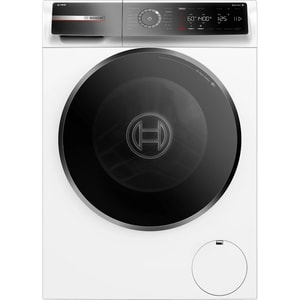
Colour: White • Wash Capacity: 10 kg • Maximum Spin Speed: 1400 rpm
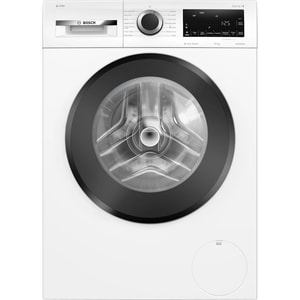
Colour: White • Wash Capacity: 10 kg • Maximum Spin Speed: 1400 rpm
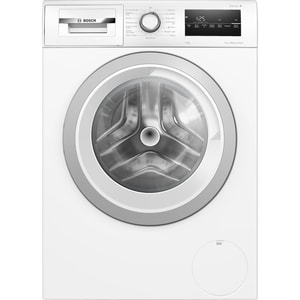
Colour: White • Wash Capacity: 9 kg • Maximum Spin Speed: 1400 rpm
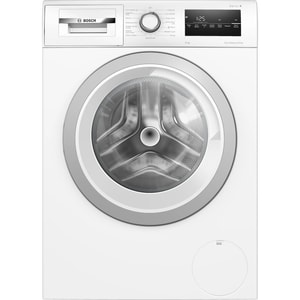
Colour: White • Wash Capacity: 8 kg • Maximum Spin Speed: 1400 rpm
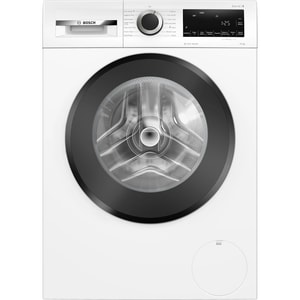
Colour: White • Wash Capacity: 10 kg • Maximum Spin Speed: 1400 rpm
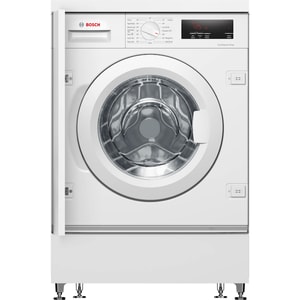
Colour: White • Wash Capacity: 8 kg • Maximum Spin Speed: 1400 rpm
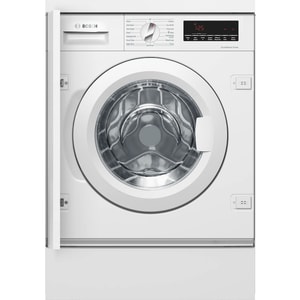
Colour: White • Wash Capacity: 8 kg • Maximum Spin Speed: 1400 rpm
Looking wider than Bosch? Browse UK washing machine deals and prices to match capacity, spin speed and features.
Series 4 or Series 6, what's the real difference?
Series 4 is the workhorse tier. Expect a 1400 rpm spin, EcoSilence Drive brushless motor, AllergyPlus and a SpeedPerfect option that shortens shorter wash cycles when you're not chasing a deep clean. It handles family laundry without much fuss and tends to land at the friendlier end of the Bosch ladder. Read More...
Series 6 adds the things that matter on a busy household rota. ActiveWater Plus weighs each load and trims water use, AntiStain tackles set-in marks across multiple soak and wash phases, and i-DOS (on supported models) measures detergent automatically so you stop guessing on dose. If you wash four or five loads a week and want fewer rewashes, the step up earns its keep.
How big a drum do you actually need?
An 8 kg drum suits a couple or a small family doing two to three washes a week. 9 kg is the sweet spot for most UK households and gives you headroom for bedding and towels in one go. 10 kg is for bigger families, sports kits, or anyone who'd rather wash duvets at home than send them out. Going larger than your routine sounds efficient, but half-empty loads waste water and energy, so size to the laundry you actually do.
Freestanding or integrated, and what changes?
Freestanding is the simpler buy. You slot it into a gap, plumb it in, and you can take it with you when you move. Integrated Bosch models hide behind a door so the kitchen line stays clean, which is worth it if a visible appliance would break the room. Integrated tends to cost more for the equivalent spec, and servicing means pulling the unit out, so factor that in.
Worth paying more for i-DOS and AntiStain?
If you do enough laundry that detergent dosing becomes guesswork, i-DOS removes the decision and protects darker fabrics from over-dosing residue. AntiStain pays off if school uniforms and sports kit are part of weekly life. On a smaller, simpler routine, a Series 4 with SpeedPerfect will do the same job for less.
Quiet running and energy class
EcoSilence Drive is the brushless motor Bosch uses across the range. It's quieter and more reliable than older brushed motors, which matters if the machine sits near a living space or runs overnight on a cheaper tariff. Energy class A is the front-runner here; class C still works hard, but expect a higher bill over a few years of daily use.
Common Bosch error codes worth knowing
E18 points at a drainage issue, usually a blocked filter or kinked hose. E17 means water isn't filling fast enough, often a pressure or inlet problem. E23 flags a leak into the base tray. E29 and E36 point at electronic faults that usually need an engineer. Most fault codes clear with a filter clean and a reset before you call out a technician.
Frequently Asked Questions
Either will cope, but Series 6 makes life easier. ActiveWater Plus and AntiStain handle bigger, dirtier loads with less rewashing, and i-DOS on supported models takes detergent dosing off your plate. Series 4 is the smarter pick if your routine is lighter or you'd rather put the budget elsewhere in the kitchen.
VarioPerfect lets you bias a wash toward speed or energy efficiency. SpeedPerfect cuts cycle time by up to about two thirds for lightly soiled loads. EcoPerfect drops energy use for the same wash result over a longer cycle. It's most useful when your evening laundry doesn't need a full programme.
EcoSilence Drive is a brushless motor with fewer wear parts and a noticeably softer wash phase than older belt-driven machines. Spin is still the loud bit at 1400 rpm. If the machine sits next to a living room or bedroom wall, look for the lower decibel ratings within the Series 6 line.
E18 means the machine can't drain. Nine times out of ten it's the pump filter clogged with coins, hair or lint, or a hose that's kinked or blocked behind the unit. Switch off at the wall, drain through the front filter into a tray, clean the impeller, and run a rinse. If it returns, the pump itself may need replacing.
Yes, monthly. Run a 90 degree empty cottons cycle with a dedicated washing machine cleaner or a cup of white vinegar to strip detergent residue and biofilm from the drum and seal. Wipe the door gasket dry after every wash and leave the door ajar to stop musty odours building up.
Most integrated Bosch models are built to the standard 60 cm housing used across UK fitted kitchens, with a sliding hinge that matches the door to the rest of the run. Always check the exact height, depth and door weight against the housing spec before ordering, especially in older kitchens where openings can drift a few millimetres.
You don't measure with i-DOS. You fill the two reservoirs (one detergent, one softener) and the machine doses by load weight, water hardness setting and soiling level. A full reservoir typically lasts around 20 washes, so you top up roughly once a month rather than each cycle.
Over a 10 year ownership, the running-cost gap between an A-rated and C-rated machine on the same routine is real, particularly if you wash four times a week or more. If you wash twice a week, the upfront difference takes longer to pay back, and other features (capacity, spin, i-DOS) may matter more.