
Samsung Tumble Dryers
Samsung's tumble dryer line-up leans heavily on heat pump technology, with a smaller condenser option for shoppers who want faster cycles. Capacities cover busy households and smaller loads, finishes range from white through to graphite, and every model has sensor drying and Wi-Fi built in.
- Relevance
- Price: Low - High
- Price: High - Low
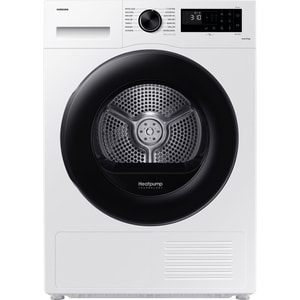
Heat Pump • Drying Capacity: 8 kg • Energy rating: A++
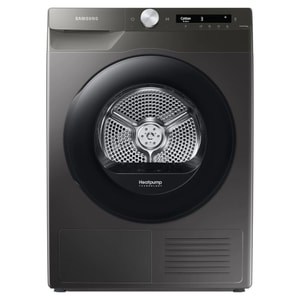
Heat Pump • Drying Capacity: 9 kg • Energy rating: A+++
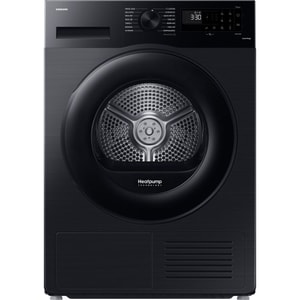
Heat Pump • Drying Capacity: 9 kg • Energy rating: A++
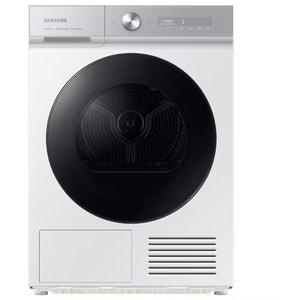
Heat Pump • Drying Capacity: 9 kg • Energy rating: A+++
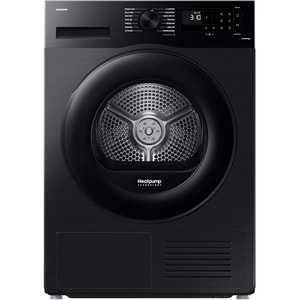
Heat Pump • Drying Capacity: 8 kg • Energy rating: A++
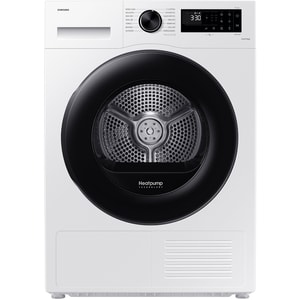
Heat Pump • Drying Capacity: 9 kg • Energy rating: A++
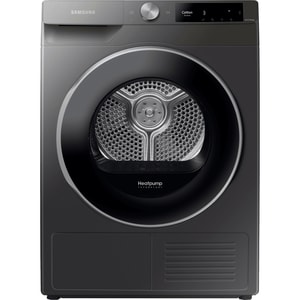
Heat Pump • Drying Capacity: 9 kg • Energy rating: A+++
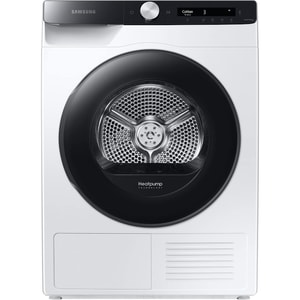
Heat Pump • Drying Capacity: 9 kg • Energy rating: A+++
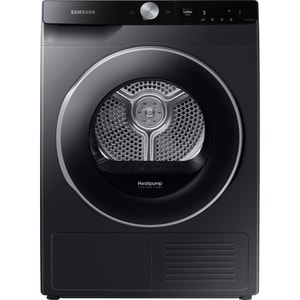
Heat Pump • Drying Capacity: 9 kg • Energy rating: A+++
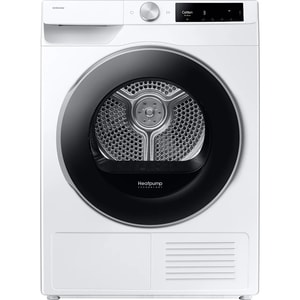
Heat Pump • Drying Capacity: 9 kg • Energy rating: A+++
Type: Heat pump • Drying Capacity: 9 kg • Energy Efficiency Class: A+++
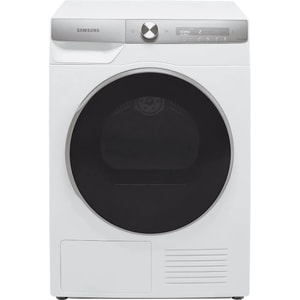
Type: Heat Pump • Drying Capacity: 9 kg • Energy Efficiency Class: A+++
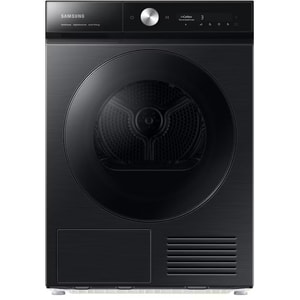
Type: Heat Pump • Drying Capacity: 9 kg • Energy Efficiency Class: A+++
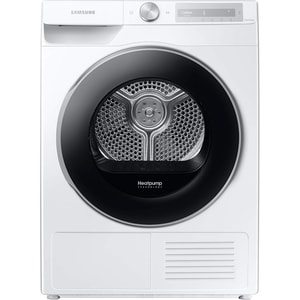
Type: Condenser • Drying Capacity: 9 kg • Energy Efficiency Class: A++
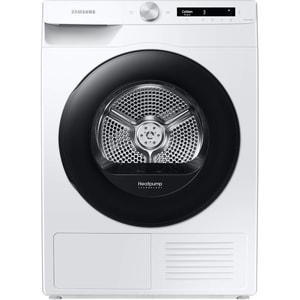
Type: Heat Pump • Drying Capacity: 9 kg • Energy Efficiency Class: A+++
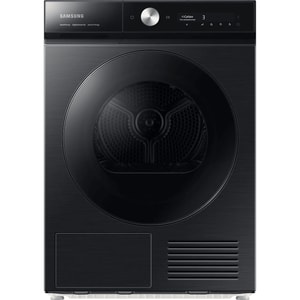
Heat Pump • Drying Capacity: 9 kg • Energy rating: A+++
How to choose a Samsung tumble dryer that suits your laundry routine
Samsung's dryer range is built around two core decisions: heat pump or condenser, and which series sits in your budget. Get those right and the rest is mostly finish and capacity. Read More...
Heat pump or condenser, which one fits your home?
Heat pump dryers run cooler, use less electricity, and treat fabrics more gently, which is why they dominate the Samsung line-up. They take longer per cycle but pay back across the year on energy bills, and they suit flats and any room without external venting because they collect water in a tank or drain through a hose.
A condenser is worth considering if you tend to dry in short bursts, prioritise speed over running cost, or want a slightly lower upfront price. Cycles finish faster, but the energy rating sits a step below heat pump equivalents.
8kg or 9kg, and how to size it to your wash
A 9kg drum is the sensible default for a family home or anyone drying bedding, towels and bulky items in one go. It also gives clothes more room to tumble, which helps reduce creasing.
An 8kg model still handles a typical full wash and takes up the same footprint, so it's a fair pick for couples or smaller households who simply don't need the extra headroom.
What the Samsung series numbers actually mean
The series tier is shorthand for how many extras you get. Series 5 covers the essentials: heat pump efficiency, sensor drying, OptimalDry moisture sensors and Wi-Fi via SmartThings. Step up to Series 6 and 7 and you'll typically gain quieter operation, refined cycle programmes, and more premium finishes such as platinum silver. Series 8 sits at the top, with the lowest noise figures and the most refined drying programmes.
If you do one or two loads a week, Series 5 is rarely a compromise. If your dryer runs daily or sits in an open-plan space where noise matters, the jump to Series 6 or 8 earns its keep.
Finish, noise and the practical bits
White is the most common finish, followed by black, graphite and a darker steel option for kitchens with deeper tones. Noise sits between 60 and 65 dB(A), which is the difference between background hum and clearly audible across a room, worth weighing up if the dryer lives near a living area.
Every Samsung dryer in this range is freestanding with sensor drying and Wi-Fi, so you can monitor cycles and get end-of-cycle alerts through the SmartThings app. Check the depth and the hinge side against your utility space before committing, particularly if you plan to stack with a washer.
Frequently Asked Questions
For most households, yes. Heat pump models use roughly half the electricity of an equivalent condenser, which adds up quickly if you dry several loads a week. They're also gentler on fabrics because they run at lower temperatures. The trade-off is cycle length, which can be 30 to 60 minutes longer, and a higher purchase price. If you dry infrequently or need cycles to finish quickly, a condenser still has a place.
OptimalDry uses two sensors, one for moisture and one for temperature, to read how wet the load is and stop the cycle when fabrics hit the dryness level you've chosen. In practice it stops the dryer over-drying cottons or leaving towels damp, which protects fabrics and avoids wasted electricity on cycles that didn't need to run their full length.
Most 9kg Samsung models are built to standard freestanding dimensions of around 60cm wide and 85cm tall, so they'll fit a typical washer slot. Depth runs to about 60 to 65cm including the hose, so measure from the wall, not the skirting. Door hinge side is fixed on most models, so check whether it opens left or right before you buy if the dryer sits next to a wall or a washer.
It's genuinely useful if you tend to forget loads. SmartThings sends a phone alert when the cycle ends, lets you start or pause remotely, and flags filter or tank reminders so you don't end up with reduced drying performance. If you'll never use the app, the feature won't add much beyond what the panel already shows.
Once a cycle for full loads, every couple of cycles for smaller ones. The tank usually slides out of the top or front and tips into a sink in seconds. If you'd rather not empty it manually, every model in this range can be plumbed to drain straight into a waste pipe, which is worth setting up at install if you have access.
It can, but check the operating temperature range in the manual. Heat pump dryers struggle below about 5°C because the refrigerant cycle relies on a reasonable ambient temperature to work efficiently. If your utility runs cold in winter, expect longer cycle times and slightly damp loads on the worst days.
The range sits between 60 and 65 dB(A) on the drying phase. The lower end is closer to a quiet conversation, the upper end is closer to a vacuum cleaner heard from another room. If the dryer lives in an open-plan kitchen or near a bedroom, aim for a Series 6 or 8 model at the quieter end of the range.
The DV90T5240 sits in Series 5 and covers the essentials: heat pump, OptimalDry sensors, Wi-Fi and a 9kg drum. The DV90T6240 is Series 6 and adds quieter operation, more programme variety and premium finishes such as platinum silver. The 6240 is the one to pick if low noise or a non-white finish matters.